
Categories
Uncategorized

Phantom Wallet vs OKX Wallet: DeFi Power User Comparison for Advanced Traders on Multiple Chains

An advanced trader managing positions across Solana, Ethereum, Polygon, and Bitcoin faces a practical problem: most wallets optimize for either simplicity or a single ecosystem. Phantom began as a Solana-native wallet but has expanded to support multiple blockchains, placing it in direct competition with OKX Wallet, which launched with multi-chain ambitions from inception. Both claim to serve DeFi participants, but they differ substantially in swap routing architecture, portfolio depth, protocol integrations, and how they handle cross-chain activity. For a user executing frequent trades, managing complex positions, and requiring granular control over transaction execution, these differences translate into real costs and friction.

The distinction matters because neither wallet is a generic “hold and view” application. Both integrate with decentralized exchanges, liquidity protocols, and lending platforms. Both display token prices, NFT galleries, and transaction history. What separates them is what happens when a power user needs to swap a large position, track yield farming activity across multiple protocols, or route capital through less obvious market paths. One wallet may offer superior routing logic while another provides clearer transaction previews or deeper integration with specific DeFi applications. Understanding those trade-offs requires examining architecture, not just feature lists.

Side-by-side interface comparison showing Phantom Wallet and OKX Wallet transaction preview and swap routing screens

Multi-chain support: breadth versus depth

Phantom supports Solana, Ethereum, Polygon, Base, Bitcoin, Sui, and several other networks through its browser extension and mobile applications. That breadth reflects the wallet’s evolution from Solana focus toward a broader multi-chain architecture. However, breadth does not guarantee depth. Phantom’s support for Bitcoin, for instance, does not include advanced UTXO management, coin control, or privacy-oriented tools. Users sending Bitcoin from Phantom cannot select specific outputs or employ sophisticated fee optimization beyond a simple “fast/standard/slow” selector. For a trader routinely moving Bitcoin between markets, that limitation is material.

OKX Wallet, by contrast, was designed with multi-chain support as a foundational principle rather than a retrofit. It supports roughly forty networks including Ethereum, Arbitrum, Optimism, Base, Polygon, Solana, Bitcoin, Avalanche, and numerous Layer 2 and sidechains. The wallet does not, however, support custom network configuration, which means users cannot add emerging or private chains even with valid RPC endpoints. Both wallets share that constraint, reflecting a security trade-off: supporting arbitrary chains increases exposure to misconfigured networks and potential signature attacks.

The practical consequence is that for a trader using primarily established networks, OKX Wallet offers broader selection at the cost of greater installation size and complexity. Phantom remains leaner, but a user wanting to trade on Arbitrum or Optimism must either accept routing through a less familiar interface or use a second wallet. Neither wallet defaults to displaying gas prices across all chains simultaneously, so a user comparing cost efficiency across networks must track that information separately. The power user typically resolves this by connecting to a portfolio tracking service or comparing chains explicitly during trade planning.

Swap routing and liquidity aggregation

Swapping tokens within a wallet requires routing logic: the application must identify liquidity sources, calculate the most efficient path, and present a quote that reflects current market conditions. Phantom’s swap feature uses aggregated routing through Orca, Marinade, Magic Eden, and other protocols, with execution handled through the Phantom DeFi wallet integration layer. For Solana tokens, the routing is mature because Phantom’s historical focus has produced deep integrations. Cross-chain swaps are more limited; moving a token from Ethereum to Solana through Phantom involves significantly fewer route options than moving between Ethereum and Polygon.

OKX Wallet uses DEX aggregation across major exchanges on each supported chain, including Uniswap V3 on Ethereum, Curve, Balancer, and network-specific AMMs. The routing algorithm evaluates multiple paths simultaneously and typically presents three to five quoted routes with different slippage and execution characteristics. Importantly, OKX Wallet displays the routing breakdown: which DEX or protocol each segment of the trade uses, the fee tiers involved, and the expected slippage. Phantom provides less granular routing visibility; users see a final quote but not always the intermediate steps.

For large orders, that visibility gap matters. A trader moving a significant portion of an altcoin position needs to understand whether the quoted rate reflects execution through a single concentrated liquidity pool or whether routing distributes the order across multiple sources. OKX Wallet’s explicit breakdown allows a user to verify whether the route avoids a pool known to have wide spreads or whether it unnecessarily crosses multiple protocols. Phantom’s simpler presentation reduces information overload for casual users but forces power users to infer routing quality from the final quote alone.

Bridge routing for cross-chain swaps represents another divergence. OKX Wallet integrates with multiple cross-chain protocols and can compare bridge costs and speed. Phantom supports cross-chain movement through established bridges but does not offer aggregated comparison. A user needing to move assets from Polygon to Solana must either use a manual bridge or rely on Phantom’s limited cross-chain swap options. For frequent cross-chain traders, this is a measurable disadvantage relative to OKX Wallet’s broader routing capabilities.

Transaction simulation and safety features

Phantom includes a transaction simulation feature that analyzes whether a proposed action will succeed before broadcasting. When a user approves a swap, token approval, or protocol interaction, Phantom runs the transaction through a simulation service to predict outcomes. If the simulation indicates that the transaction would revert—due to insufficient liquidity, slippage exceeding tolerance, or a protocol issue—Phantom warns the user before funds are committed. This is a valuable safety mechanism because a failed transaction still consumes gas without changing balances.

OKX Wallet provides similar simulation capabilities on Ethereum and several other networks, but coverage is uneven. On chains with less mature node infrastructure or fewer block explorers, simulation may be unavailable or unreliable. Phantom’s simulation is more consistently available across supported chains because Solana’s architecture and Phantom’s long history with the ecosystem have enabled reliable integration. However, neither wallet simulates the second-order effects of a swap if executed during volatile market conditions or if your transaction is delayed in the mempool.

Scam detection and signature warnings represent a second safety layer. Both wallets flag suspicious contracts, unusual token approvals, and transactions that attempt to drain existing allowances. Phantom’s scam detection is powered by integration with security firms and community reporting. OKX Wallet uses similar heuristics. The key distinction is that both wallets warn against but do not prevent a user from approving an obviously malicious contract. A user who understands what they are signing can override the warning, which is necessary for legitimate but unusual operations. The protection is therefore a speed bump, not an absolute barrier.

Portfolio tracking and position management

Phantom displays token balances, recent transaction history, and basic portfolio metrics including total value and 24-hour price changes. The wallet does not provide advanced analytics: there is no built-in tax reporting, yield tracking, or protocol-specific position summarization. A user farming yield on Lido, Aave, or Raydium must track rewards and position values externally or through a specialized analytics platform. This limitation becomes acute when managing multiple positions across several chains and protocols.

OKX Wallet offers marginally more portfolio context. It displays recent transactions and balances more cleanly and integrates with OKX’s backend for price data consistency. However, it similarly lacks automated yield tracking or tax-report generation. Both wallets leave sophisticated portfolio management to external services. A power user typically supplements either wallet with a platform such as Zapper, DeBank, or Zerion to understand complex positions, track yield, and calculate tax liabilities.

The difference emerges in how each wallet presents transaction history. Phantom’s transaction display includes on-chain interaction type (swap, transfer, contract interaction) with reasonable clarity. OKX Wallet presents similar information but with a slightly more detailed breakdown of token flows within a single transaction. For a user who relies on wallet history to audit their own activity or reconcile positions, OKX Wallet’s additional clarity is incrementally useful. Neither wallet, however, provides the automatic categorization that specialized portfolio trackers do, so a user managing dozens of positions will need external tools regardless of wallet choice.

DeFi protocol integrations and native connections

Phantom maintains native integrations with Solana-based DeFi protocols including Marinade (staking), Raydium (swaps and liquidity provision), Magic Eden (NFTs), and others. These integrations allow users to interact with protocols through dedicated screens within the wallet rather than visiting external websites. For Solana users, this reduces friction: a trader can stake SOL, swap tokens, or browse NFTs without leaving the wallet interface. On other chains, Phantom does not offer equivalent native protocol integrations; users must connect to external sites through WalletConnect.

OKX Wallet similarly provides native integrations with popular protocols on major chains. On Ethereum, users can access Uniswap and Aave directly through the wallet. On other chains, integration depth varies. The more significant distinction is that OKX Wallet does not prioritize specific protocols in the same way Phantom does for Solana. A user cannot assume that any given DeFi application has a dedicated OKX Wallet integration; connecting through WalletConnect is the standard path.

This matters less than it appears because WalletConnect is mature and reliable. A trader using a protocol not specially integrated into their wallet of choice can still connect, approve transactions, and interact normally. The integration primarily reduces steps: instead of opening a browser tab, navigating to the protocol, and clicking “Connect Wallet,” the user taps a protocol card within the wallet. For routine operations, this saves seconds. For someone executing a complex series of swaps or yield farming operations during volatile conditions, every small improvement to speed and interface consistency matters.

Token approvals and allowance management deserve explicit mention here. Both wallets allow users to review and revoke token approvals, which is essential for risk management. If a user has approved a large allowance to a DEX or protocol and later suspects compromise or wants to eliminate exposure, they can approve a zero-value transaction to revoke the allowance. Neither wallet automates this process or warns preemptively that an allowance is unusually large. A power user typically manages approvals explicitly, granting only the allowance needed for the current transaction.

Gas optimization and fee management

Phantom’s fee controls vary by chain. On Solana, the wallet sets fees automatically with minimal user intervention because Solana’s fixed-fee model leaves little room for optimization. On Ethereum and Polygon, Phantom offers “fast,” “standard,” and “slow” gas options that map to percentile-based fee suggestions. Users cannot enter a custom gas price, which limits optimization during periods of acute congestion or when the user has specific timing preferences. A trader wanting to bid slightly below the “standard” rate to save costs cannot do so through Phantom’s interface.

OKX Wallet provides similar gas-selection options on Ethereum and other chains, with an additional “custom” mode that allows direct entry of gas price and gas limit. This is a meaningful advantage for power users. During congestion, a trader can lower gas price slightly below Phantom’s “slow” option to optimize cost. During low-congestion periods, they can be more aggressive with a “fast” price without overpaying unnecessarily. The custom option also helps when executing priority transactions: a user can set gas price precisely to land in the next block without excessive overpayment.

For Layer 2 networks such as Polygon and Base, gas costs are low enough that fee optimization is less critical. A few dollars in difference is immaterial relative to transaction value. On Ethereum mainnet, especially during sustained high activity, fee selection becomes more consequential. A trader executing a hedging position or rebalancing a large yield farm wants precise control over execution cost. OKX Wallet’s custom gas option is therefore more valuable for Ethereum power users; Phantom’s preset options are adequate for most scenarios but occasionally inefficient.

Mobile performance and extension stability

Phantom is available on iOS and Android as a native mobile application. The mobile version provides the core wallet functionality: viewing balances, sending and receiving tokens, approving transactions, and viewing transaction history. It does not offer desktop-equivalent swap routing; mobile swaps use simplified aggregation and do not display the multi-route comparison available on the extension. NFT functionality is present but scaled for smaller screens. A user managing complex positions from a phone will find the experience functional but constrained.

OKX Wallet offers iOS and Android applications with feature parity closer to the desktop version. Swap routing, multi-chain navigation, and NFT browsing are mobile-optimized but retain more depth than Phantom’s mobile interface. OKX Wallet’s mobile design makes trading on secondary chains more practical because the full routing logic is available. However, the added complexity can make the mobile app slower and battery-intensive relative to Phantom’s leaner mobile wallet.

Browser extension stability is a practical consideration for power users who keep the wallet open throughout the day. Phantom’s extension has historically been stable, particularly on Chrome and Brave. On Firefox, occasional synchronization issues have been reported, though these are rare. OKX Wallet’s extension is similarly stable on major browsers. Both wallets can occasionally require re-locking and re-unlocking if the browser is inactive for extended periods, which is a security feature but can create friction during long trading sessions.

The Phantom DeFi wallet integration and extension design prioritize responsiveness when interacting with Solana protocols. Users heavily focused on other chains may find OKX Wallet’s more balanced multi-chain design less jarring. Conversely, Solana traders will notice that Phantom is optimized for their specific use case, with faster page loads and smoother interactions within Solana DeFi. The choice therefore depends partly on whether your trading is concentrated in one ecosystem or distributed across multiple chains.

Practical decision framework for power users

A trader deciding between Phantom and OKX Wallet should answer three specific questions. First, what is your primary trading ecosystem? If Solana dominates your activity, Phantom’s optimizations and deep protocol integrations make it the natural choice. If you trade equally across Ethereum, Arbitrum, Optimism, and Polygon, OKX Wallet’s broader and more balanced multi-chain support is superior. Phantom remains competent on other chains but does not prioritize them in the same way.

Second, do you require granular control over swap routing and gas pricing? A user comfortable with preset options can use either wallet without friction. A user wanting to compare multiple swap routes, evaluate bridge costs, or optimize gas prices during specific market conditions needs OKX Wallet’s custom options. If you access the Phantom Wallet download page and install the extension, you will find that custom routing and gas controls are absent; this is not a limitation specific to Phantom, but rather a design choice favoring simplicity over advanced options.

Third, how much portfolio complexity do you manage? If your positions are mostly straightforward token holdings with occasional swaps, either wallet provides adequate tracking. If you farm yield across multiple protocols, use leverage positions, or manage complex token strategies, you will benefit from using a specialized portfolio tracker regardless of wallet choice. Neither Phantom nor OKX Wallet replaces platforms like Zapper or DeBank for sophisticated position analytics.

A secondary consideration is ecosystem philosophy. Phantom’s Solana roots remain visible in its design and priorities; it is most mature where Solana is most developed. OKX Wallet reflects its exchange heritage: it is optimized for traders moving between multiple chains and markets. Neither approach is objectively superior; the fit depends on your actual trading patterns and the chains you use most frequently.

Future considerations and ecosystem maturity

Both wallets face ongoing pressure to expand multi-chain support and improve routing logic as the DeFi ecosystem evolves. Phantom’s trajectory suggests continued investment in non-Solana chains, particularly Ethereum and emerging Layer 2s. OKX Wallet’s trajectory is less predictable because it depends on OKX’s strategic priorities; the exchange could deemphasize the wallet in favor of its core trading platform or accelerate it if wallet-based trading becomes a competitive differentiator.

The competitive landscape is also shifting with new entrants. Hardware wallet manufacturers such as Ledger are expanding software wallet functionality. Metamask, while primarily Ethereum-focused, continues to improve multi-chain support and swap routing. Phantom and OKX Wallet’s advantages are therefore temporary; they must continue iterating or risk becoming secondary tools. A power user should evaluate wallets not just on current capabilities but on how quickly they have historically improved and their apparent commitment to DeFi sophistication.

Regulatory changes will also affect wallet functionality. If custody models, transaction routing, and swap interfaces face increased regulatory scrutiny, both wallets may need to modify features or implement additional compliance checks. This is unlikely to affect advanced traders immediately, but it is a background risk factor worth monitoring. Neither wallet is currently subject to the licensing requirements that centralized exchanges face, but that status could change.

Frequently asked questions

Can I use Phantom Wallet for trading on Ethereum and Polygon the same way I use it on Solana?

Phantom supports Ethereum and Polygon, but its native protocol integrations and optimizations are concentrated on Solana. On other chains, you can swap tokens through aggregated DEX routing, but you have fewer dedicated protocol connections and less granular control over routing compared to a wallet like OKX Wallet. For occasional cross-chain trading, Phantom is adequate; for frequent multi-chain active trading, OKX Wallet offers more depth.

Does OKX Wallet provide better swap routing than Phantom?

OKX Wallet displays explicit routing breakdowns showing which DEXs and protocols are used for each part of a trade, which allows you to evaluate the path quality. Phantom provides a final quote but less visibility into the intermediate routing steps. On Solana, Phantom’s routing is mature and competitive. On other chains, OKX Wallet’s detailed route display provides more transparency for power users. Neither wallet guarantees the best possible rate; both depend on current liquidity and market conditions.

What portfolio tracking features do these wallets provide?

Both Phantom and OKX Wallet display token balances, transaction history, and basic price metrics. Neither provides automated yield tracking, tax reporting, or complex position analytics. Power users managing yield farming or multiple protocol positions should supplement their wallet with a specialized tracker such as Zapper, DeBank, or Zerion. The wallet itself is sufficient for viewing holdings and executing trades, but not for sophisticated portfolio management.

Categories
Uncategorized

Receiving Cryptocurrency in Ledger Live: How Address Verification on Your Device Prevents Theft

A user receives a deposit address displayed in their wallet application, confirms it matches their records, and approves a transfer of funds from an exchange or peer. Within seconds, the transaction broadcasts to the blockchain. Days later, the user discovers the funds are missing—not from the blockchain, but directed to an attacker’s address instead. The receiving address shown in the software application did not match the address the user actually controlled. This is an address-swapping attack, and it succeeds because the victim trusted software running on a potentially compromised computer or phone without verifying the destination with independent hardware.

Ledger Live addresses this vulnerability at its foundation by making address verification a hardware-secured process rather than a software display issue. When you receive cryptocurrency using Ledger Live, the application does not simply show you an address and ask you to trust it. Instead, the secure element inside your Ledger hardware wallet generates the address, displays it on the device’s physical screen, and cryptographically confirms that the address you see on your computer or mobile phone matches the one that controls your private keys. This three-layer verification—secure hardware generation, independent physical display, and cryptographic confirmation—makes address-swapping attacks substantially more difficult because an attacker would need to compromise not only your computer but also your hardware device itself.

Ledger Live interface displaying address verification workflow with hardware device screen confirmation

The address-swapping attack and why software-only verification fails

Address-swapping attacks exploit the assumption that what appears on your screen is what you intended. Malware on a computer can intercept the address generation process, modify the address displayed to the user, and redirect payments to an attacker-controlled destination. A compromised mobile application, a phishing website mimicking a wallet, or even a man-in-the-middle attack during data transmission can all produce the same result: the user believes they have shared their receiving address, but the blockchain record shows a transaction to someone else’s wallet.

The attack is particularly effective because it requires no technical sophistication from the victim. No passwords are stolen, no recovery phrases are exposed, and no account is compromised. The user simply follows normal procedures—requesting a deposit address, sharing it, and receiving funds—and loses money because the address shown to them was false. Traditional software wallets attempt to mitigate this by displaying the address multiple times, allowing users to copy it carefully, or showing it in QR code format. None of these measures solve the fundamental problem: the software cannot prove to the user that the address it displays is actually associated with the keys it controls, because a compromised application can lie about both.

This is where the distinction between hot wallets and hardware-secured wallets becomes operationally important. A hot wallet—a piece of software running on a general-purpose computer or phone—has no way to prove that an address belongs to the wallet’s actual keys without relying on the same software that may be compromised. It can sign transactions, which proves possession of private keys, but only after the user has approved sending to an address that they verified using compromised software. Hardware wallets solve this by separating address generation and display from the device that runs your everyday software.

How Ledger Live uses the hardware device screen as a verification layer

When you request a receiving address in Ledger Live, the application initiates a process that does not complete on your computer or phone. Instead, the request is sent to your Ledger hardware wallet, where the secure element generates the address using your private keys. Critically, the address is displayed on the hardware device’s physical screen before it ever appears in the Ledger Live application on your computer or mobile phone. This physical display on the device itself becomes the canonical verification surface.

The address shown on your hardware device’s screen is generated directly from the keys stored in the secure element, without any involvement from the general-purpose processor in your computer or the operating system on your phone. An attacker would need physical access to your device or would need to compromise the secure element itself—a substantially higher barrier than compromising software on an internet-connected machine. When you review the address on the hardware screen and compare it to what appears in Ledger Live, you are comparing the truth (the hardware display) against the potentially compromised representation (the software display).

After you confirm the address by pressing a button on the hardware device, the application receives a cryptographic attestation that the address you approved on the device matches what is now being displayed in Ledger Live. This attestation is not user-verifiable in the way a manual screen comparison is, but it serves a different purpose: it proves to the wallet software that the device has authorized this address for receiving funds. If an attacker had modified the address in Ledger Live after the device confirmed it, the attestation would no longer match, and the receiving address would be rejected or flagged as inconsistent.

The role of private key security in preventing address theft

Address security is inseparable from private key security, and this is where Ledger Live’s architecture reveals its full importance. The private keys associated with your wallet never leave the secure element inside the hardware device. They are not stored on your computer, not backed up to your phone’s cloud service, and not transmitted to Ledger’s servers. This means that even if an attacker gains complete control of the computer or phone running Ledger Live, they cannot derive your receiving addresses by stealing your keys—because the keys are not on that computer.

The hardware device generates addresses deterministically using your private keys and a derivation path. The same private keys will always produce the same sequence of addresses. An attacker cannot forge an address and claim it belongs to your wallet because doing so would require either the private key itself or the ability to predict the derivation function—both of which are mathematically infeasible and both of which require access to the secure element, not just the software. The receiving addresses shown in Ledger Live are legitimate public addresses derived from your private keys only because the hardware device performed the derivation and confirmed it.

This architecture also means that address verification is not a luxury or a paranoid extra step. It is the only reliable way to confirm that a deposit address actually belongs to you. In a software-only wallet, you must trust the software. In Ledger Live, you verify the address on hardware and then compare it to the software display. If they match, you have confirmation from a device that cannot be remotely compromised by standard internet attacks. If they do not match, you know not to use the address, and you can investigate why your computer’s display differs from your device’s display.

Practical address verification workflow in Ledger Live

The actual process of receiving cryptocurrency in Ledger Live follows a deliberate sequence designed to maintain security at each step. First, the user opens the Ledger Live application and navigates to the account from which they want to receive funds. This account is managed on the hardware device, not in the software, which means the account itself is secured by the device’s secure element and your recovery phrase.

Second, the user requests a receiving address. Ledger Live sends this request to the connected hardware device. The device generates an address using the private key associated with the selected account and the next unused derivation path. The address appears on the hardware device’s screen. At this point, the user must physically verify the address by reading it from the device’s display. This is the critical moment: the user is comparing their own hardware against their own computer or phone, not trusting the software alone.

Third, if the address shown on the device screen matches the user’s records or expectations, the user presses a confirmation button on the hardware device. This action cryptographically signs the address authorization within the secure element. The device returns this confirmation to Ledger Live, which then displays the address in the application along with a QR code and copy options for sharing with a sender.

Fourth, the user can now confidently share this receiving address with an exchange, peer, or payment service. When funds are sent to this address on the blockchain, the transaction is immutably recorded on the distributed ledger. Because the address was verified on the hardware device before it was shared, the receiving address actually corresponds to private keys that only the user controls. When the funds arrive, the user sees the transaction in Ledger Live, and the balance updates accordingly.

How address verification protects against supply-chain and software-injection attacks

Address verification on the hardware device provides protection against a broader category of attacks beyond simple malware on your computer. A compromised version of Ledger Live, distributed through a phishing site or a compromised app store, could attempt to modify receiving addresses. However, if the user follows the verification protocol—confirming the address on the hardware device before using it—the phishing application’s altered address would fail the verification check. The user would see two different addresses and would know not to proceed.

Similarly, a man-in-the-middle attacker positioned between your computer and your hardware device, or between your phone and your device, could attempt to intercept and modify the address. Because the address is displayed on the device’s physical screen, a remote attacker cannot intercept this display without physically tampering with the device itself or compromising the secure element. The comparison between the hardware screen and the software display becomes an effective defense against network-level interception.

This is also why the recovery phrase and the hardware device itself must be protected with physical security discipline. The address verification process protects you from software attacks, but it does not protect you from someone who physically accesses your device or who coerces you into revealing your recovery phrase. Self-custody, which is fundamental to hardware wallets and Ledger Live, means that the user bears responsibility for the physical security of the device and the secrecy of the recovery phrase. No software vendor, including Ledger, can protect you from losing or misplacing your device or sharing your recovery words.

Comparing address verification across different blockchain networks

Ledger Live supports receiving addresses across multiple blockchain networks: Bitcoin, Ethereum, Litecoin, Solana, and many others. The address format varies by blockchain—a Bitcoin address looks different from an Ethereum address—but the verification process remains consistent. When you request a receiving address for any supported blockchain in Ledger Live, the hardware device generates an address specific to that blockchain using the appropriate derivation path and cryptographic scheme for that network.

The hardware device displays the address on its screen regardless of which blockchain you have selected. This is important because address confusion attacks can exploit the visual similarity between addresses on different networks. An attacker might try to trick a user into sending Ethereum to a Bitcoin address, or vice versa. Because the address verification step explicitly ties the address to a specific account and blockchain within Ledger Live, the user can confirm not only that the address is correct but also that they are receiving to the intended blockchain. The hardware display includes context about which account is generating the address, reinforcing the connection between the address and the blockchain.

Multi-account management across different cryptocurrencies also benefits from address verification. A user might maintain separate accounts for Bitcoin, Ethereum, and other assets, all secured by the same recovery phrase and hardware device. When receiving funds, the user must select the correct account for the asset they expect to receive. The hardware device confirms which account is generating the address, and the user verifies this on the physical screen before approving the deposit. This prevents the accidental or malicious misdirection of funds to the wrong account or blockchain.

What address verification does and does not protect

Address verification on the hardware device provides strong protection against address-swapping attacks originating from compromised software. It does not, however, protect against every category of loss or theft. If a user has shared their recovery phrase with another person or stored it insecurely, that person can recreate the wallet on any device and access all funds without needing to attack receiving addresses. If a user approves a transaction that sends their entire balance to an attacker, address verification cannot prevent this—the user is explicitly authorizing the transaction.

Address verification also does not protect against sender error or fraud conducted by a counterparty. If a user accidentally sends funds to the wrong address because they misread it, or if they are tricked into sending funds to an attacker posing as a legitimate recipient, address verification cannot prevent this. The verification step confirms that the address the user is using actually belongs to them; it does not confirm that the address is owned by the intended recipient of a payment.

Finally, address verification operates within the context of the blockchain itself. If a user receives cryptocurrency to a correctly verified address, but the blockchain is attacked, forked, or compromised by a 51% attack, address verification cannot prevent loss of funds at the blockchain level. These are separate categories of risk. Address verification specifically addresses the threat that the address displayed to you does not actually correspond to your private keys—a threat that is particular to software wallets and that hardware-secured address verification effectively mitigates.

The three-layer security architecture in context

Ledger Live operates within a three-layer security model: the secure hardware element, the secure operating system running on the device, and the Ledger Live application as the transaction interface. Address verification exemplifies how these layers work together. The secure hardware element generates the address and controls its display on the physical screen, isolated from your computer’s operating system. The secure operating system on the device manages the interface between your computer and the secure element, ensuring that requests are routed correctly and that confirmations are processed safely. The Ledger Live application on your computer or mobile phone receives the cryptographically confirmed address and displays it to you in user-friendly format.

This separation of concerns means that each layer provides redundant security. If malware compromises your computer, it cannot compromise your private keys or forge addresses because these functions are isolated in the hardware. If the Ledger Live software is outdated or vulnerable, you can still verify addresses on the hardware screen and detect if the software is displaying something different. If the operating system on your phone is exploited, the attacker can see what addresses you receive, but they cannot change those addresses or redirect funds because the address generation and confirmation occurs on the device, not on the phone.

You can access the official application and documentation through ledger live, where you will also find setup guides, troubleshooting resources, and information about supported blockchains. The security of receiving cryptocurrency ultimately depends on using this application correctly: connecting a genuine Ledger device, verifying addresses on the hardware screen, and protecting your recovery phrase as though it were equivalent to your private keys themselves. The technology handles address generation and verification, but the user’s discipline determines whether the security architecture functions as intended.

Frequently asked questions

Why do I need to verify receiving addresses on my Ledger device instead of just trusting the address shown in Ledger Live?

Address-swapping attacks exploit compromised software to redirect funds to attacker-controlled addresses. By verifying the address on your hardware device’s physical screen before using it, you confirm that the address actually corresponds to your private keys. If the address displayed in Ledger Live differs from what you see on the device, you know not to use it and can investigate the discrepancy.

Can someone intercept my receiving address between my Ledger device and my computer?

The address is generated and displayed on the hardware device’s physical screen before it ever reaches your computer. A remote attacker cannot intercept this physical display without tampering with the device itself. Network-level attacks cannot modify the address shown on the device’s screen, which is why the comparison between the hardware display and the Ledger Live display serves as an effective verification mechanism.

Does address verification protect me if someone steals my recovery phrase?

No. Address verification protects you from address-swapping attacks originating from compromised software. If your recovery phrase is compromised, an attacker can recreate your entire wallet and access all your funds regardless of address verification. Protecting your recovery phrase with physical security and secrecy is your responsibility as someone using self-custody through Ledger Live.

What happens if the address on my Ledger device screen does not match the address in Ledger Live?

This discrepancy indicates a potential security issue. Do not use the address. Instead, disconnect your device, restart your computer or phone, reconnect the device, and attempt to generate a new receiving address. If the addresses continue to differ, contact Ledger support and use only the address displayed on your hardware device until you understand the cause of the mismatch.

Categories
Uncategorized

Smart Contract Interaction Is the New DeFi Risk Boundary

You are moving funds on a decentralized exchange before work, comparing a quoted price with the amount you expect to receive. The interface looks familiar: connect a wallet, approve a token, confirm a swap. Yet the decisive event is not the button click. It is the set of instructions sent to a smart contract, the permissions attached to those instructions, and the state of several blockchains at the moment the transaction is executed. A transaction can therefore be valid, signed, and mined while still producing an outcome the user did not intend.

This is the central shift in DeFi. Wallets were once treated mainly as key storage and transaction broadcasters. Increasingly, they are becoming interpretation and risk-analysis layers between people and programmable financial systems. That change matters for US users navigating multiple EVM networks, unfamiliar dApps, token approvals, bridges, lending markets, and rapidly changing contract deployments.

Wallet interface illustrating how users review smart contract actions before interacting with DeFi protocols

From sending transactions to interpreting intent

Early Ethereum usage encouraged a simple mental model: an address sends an asset to another address. DeFi made that model inadequate. A single transaction may call a router, which calls a liquidity pool, which transfers tokens, updates accounting records, and invokes another contract. The user sees “swap,” but the blockchain processes a sequence of machine-readable operations.

A smart contract is code deployed on a blockchain. A DeFi protocol is usually a collection of such contracts that coordinate rules for trading, lending, borrowing, staking, or derivatives. A dApp, or decentralized application, is the user-facing software that helps people form and sign those interactions. These layers are related but not identical. The dApp may be compromised or poorly designed even when the underlying protocol is sound; a protocol may be audited yet still expose a risky function; and a wallet may accurately display a transaction without being able to guarantee the contract’s economic behavior.

The useful question is therefore not simply, “Is this dApp legitimate?” It is: “What will this exact transaction cause, under the current chain state, and what authority will I give the contract afterward?” That question separates identity-level trust from transaction-level analysis.

Why transaction simulation changes the decision

Transaction simulation attempts to execute a proposed transaction against a representation of current blockchain state before the user signs it. Depending on the implementation and network conditions, the resulting preview may reveal expected token transfers, approvals, balance changes, contract failures, or suspicious recipients. This is valuable because raw calldata—the encoded instructions sent to a contract—is not written for ordinary reading.

Simulation creates a practical bridge between code execution and human judgment. Instead of relying only on a dApp’s labels, the user can inspect consequences: which asset leaves the wallet, which asset arrives, whether an approval grants a narrow amount or effectively unlimited spending authority, and whether the transaction touches an unexpected contract.

There is an important limitation. A simulation is a conditional forecast, not a guarantee. The blockchain state can change between simulation and inclusion. A liquidity pool may move, a quote may expire, a contract may depend on block timestamp or transaction ordering, or a malicious contract may behave differently under certain conditions. Network-specific support can also vary. Simulation is best understood as a strong warning and comprehension tool, not an oracle of future truth.

This distinction is easy to miss. A green simulation does not mean an investment is safe, a token is valuable, or a protocol is solvent. It means that under the tested assumptions, the transaction produced an expected execution result. Economic risk remains separate from execution risk.

Approvals reveal the hidden persistence of DeFi access

One of the most consequential concepts in smart contract interaction is the token allowance. When a user approves a contract to spend an ERC-20 token, the permission can remain active after the immediate swap or deposit is complete. If the allowance is broader than necessary and the approved contract later becomes vulnerable or malicious, the permission may create a path to future loss.

This is why “I only signed one transaction” can be misleading. The first transaction may establish a durable capability rather than transfer funds immediately. A wallet that distinguishes an approval from a direct transfer helps users reason about persistence: what authority was granted, to whom, for which token, and for how much?

Limited approvals reduce exposure but can introduce friction and additional transactions. Unlimited approvals are convenient and may reduce repeated signing, yet they enlarge the consequences of a compromised spender. Neither choice is universally correct. A user interacting frequently with a well-understood protocol may accept a different operational trade-off from someone testing a new dApp with a large balance in the same wallet.

A reusable rule is to treat approvals as access-control decisions, not routine pop-ups. Review them separately from the financial strategy. Periodically revoke permissions that are no longer needed, while recognizing that revocation itself is an on-chain transaction with a network fee and may not address every form of contract risk.

dApp integration is a trust boundary, not a convenience feature

Wallet integration allows a dApp to request account access, identify a network, prepare transactions, and ask the user to sign them. That convenience can conceal a division of responsibility. The dApp chooses what to construct; the wallet controls the signing interface; the blockchain determines what executes. A failure in any layer can produce a harmful result.

For this reason, users should verify the network and contract context rather than relying on visual familiarity. A convincing interface can point to a look-alike contract. A legitimate protocol can deploy different contracts across chains. A token symbol can be copied. A transaction can also route through a contract that the user did not notice because the interface compressed several actions into one button.

Advanced wallets such as rabby are useful in this environment when they make chain context, contract interaction, simulation results, and warnings more visible before signing. The value is not that a wallet eliminates judgment. Its value is that it can expose information at the moment when judgment is still possible.

That last point is more important than it sounds. Security warnings have diminishing value after confirmation. A warning placed beside the exact asset change or approval scope is more actionable than a general message that says users should “be careful.” Good interface design turns abstract security advice into a decision about a specific transaction.

A practical framework for reviewing a DeFi transaction

Before signing, examine the interaction in four passes. First, identify the action: swap, supply, borrow, withdraw, bridge, stake, or approval. Second, identify the authority granted: is the contract receiving tokens, permission to spend them, or control over another position? Third, inspect expected outputs and recipients. Fourth, ask what remains true after the transaction finishes.

The fourth question catches risks that a one-screen preview may not. A deposit may create a receipt token with its own risks. A borrow may introduce liquidation exposure. A bridge may leave assets dependent on a separate messaging system. A staking transaction may create an unlocking delay. A successful call can therefore be operationally dangerous without being technically anomalous.

It is also useful to separate three categories of risk:

  • Execution risk: the transaction fails, uses unfavorable conditions, or affects an unexpected asset.
  • Permission risk: an approval or authorization remains available to a contract longer or more broadly than intended.
  • Protocol risk: the underlying code, economic design, oracle assumptions, governance, or dependencies fail.

Simulation primarily helps with the first category and can illuminate the second. It cannot, by itself, resolve the third. This boundary prevents a common mistake: treating a readable transaction preview as a substitute for evaluating the protocol’s design and incentives.

What has changed in the current DeFi wallet

The history of DeFi interfaces is partly a history of abstraction. Early users inspected addresses and function calls directly. Later interfaces made actions easier but often hid the composability that made them powerful. The current direction is a return of detail in a more usable form: wallets increasingly attempt to translate contract behavior into asset movements, permissions, warnings, and likely outcomes.

Recent positioning around Ethereum and EVM support reflects the practical reality that users no longer operate on one chain alone. EVM compatibility makes contract patterns portable, but it does not make every deployment identical. Liquidity, fees, contract versions, bridge assumptions, and token behavior can differ by network. “Same dApp” does not necessarily mean “same risk profile.”

The likely next step, if the technical and interface challenges are solved, is more context-sensitive signing. Wallets could present different levels of scrutiny depending on transaction size, contract history, approval scope, and whether the interaction is familiar or novel. That development would be useful, but it raises a design question: how much automation should a wallet provide before users stop understanding what they are authorizing? The best systems will probably need both fast paths for routine actions and deliberate review for unusual ones.

FAQ

Does transaction simulation guarantee that a DeFi transaction is safe?

No. Simulation can show how a transaction is expected to execute under particular assumptions, but blockchain state can change before inclusion. It also cannot establish that a protocol is solvent, that a token has value, or that a contract will behave safely in every future interaction.

Why should I care about token approvals if I am only making one swap?

An approval may give a contract continuing permission to spend a token. The swap may be completed, but the permission can remain. Review the approved spender and amount, prefer narrower permissions when practical, and revoke unused allowances while remembering that revocation requires another on-chain transaction.

Can a wallet protect me from a malicious DeFi protocol?

A wallet can improve visibility, flag suspicious patterns, and help users understand proposed effects. It cannot replace protocol research or eliminate smart contract, oracle, governance, liquidity, and market risks. Wallet security is one layer in a broader risk-control process.

The most durable lesson is simple but not simplistic: signing is not the same as understanding. Smart contract interaction sits between human intent and deterministic execution, and the gap between those two is where many DeFi losses begin. A capable wallet narrows that gap by showing consequences, permissions, and chain context before authorization. The user still makes the final decision, but better information changes the quality of that decision—and, in a composable financial system, that is a meaningful security improvement.

Categories
Uncategorized

Yield Farming, MEV Protection, and Portfolio Tracking: What DeFi Users Still Get Wrong

A wallet can show a position worth $10,000 while its owner is quietly losing money. The apparent contradiction is common in decentralized finance: displayed balances may ignore impermanent loss, unclaimed rewards, approval risk, gas costs, and the value extracted by faster market participants. Yield farming is therefore not simply a search for the highest annual percentage yield. It is a coordination problem involving smart contracts, liquidity, transaction ordering, and incomplete information.

For US-based DeFi users moving across Ethereum and other EVM networks, the practical question is not whether a wallet can connect to a protocol. Almost all serious wallets can do that. The more important question is whether the interface helps the user understand what a transaction changes before signing it, whether it makes cross-chain positions legible, and whether its security features address real failure modes rather than merely adding reassuring labels.

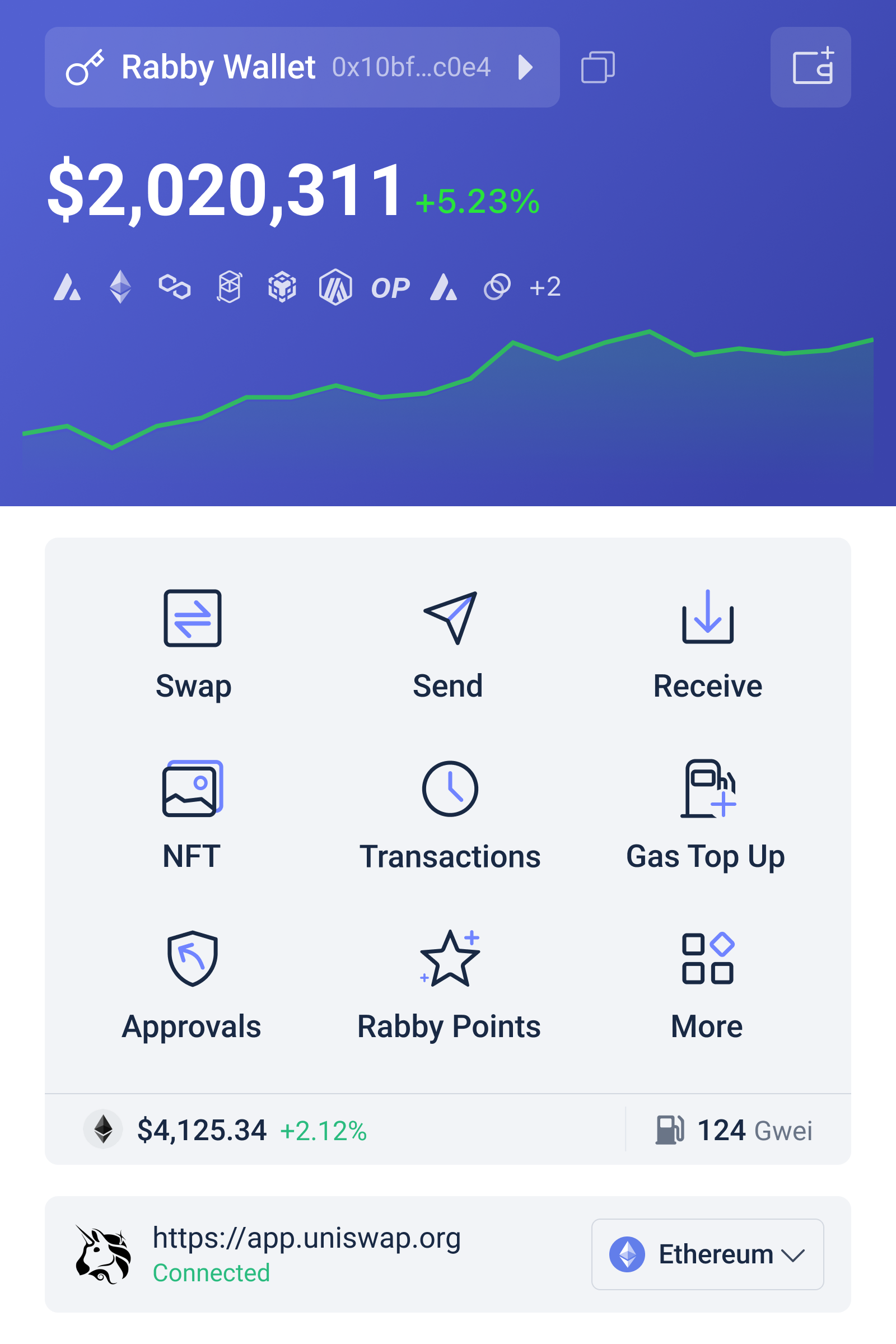
Rabby Wallet interface representing transaction simulation and multi-chain DeFi portfolio visibility

Myth One: The Highest Yield Is the Best Opportunity

Yield farming usually means supplying assets to a decentralized protocol in exchange for fees, interest, incentives, or some combination of the three. A liquidity provider might deposit two tokens into an automated market maker, while a lending participant supplies capital that borrowers use. The quoted yield is a rate of return under a set of assumptions, not a guarantee and not necessarily a measure of economic profit.

The first misconception is that a large displayed APY compensates for every risk. It does not. A reward token can fall in price, incentives can be reduced, and the strategy can expose the user to smart-contract risk. In a two-asset liquidity pool, the relative price movement of the assets can also create impermanent loss: compared with simply holding the assets, the liquidity position may end up with less value when prices diverge. Fees may offset that loss, but only if trading activity and fee income are sufficient.

A more useful mental model separates gross yield from net, risk-adjusted outcome. The calculation should consider reward-token volatility, entry and exit gas, slippage, borrowing costs, tax treatment, and the probability that a protocol or oracle fails. For US users, tax reporting can add another layer of complexity because swaps, reward receipts, and liquidity movements may not map neatly onto a single economic event. A dashboard can organize the information, but it cannot determine a user’s tax position or eliminate the underlying uncertainty.

The non-obvious point is that yield farming is partly a bet on future market structure. A high incentive may attract liquidity, but that liquidity can leave when the incentive falls. A lower nominal yield from durable trading fees or lending demand may be more resilient than a spectacular temporary reward. The relevant question is not “What is the APY?” but “Where does the return come from, and what must remain true for it to continue?”

Myth Two: MEV Protection Means a Transaction Cannot Be Exploited

MEV, or maximal extractable value, describes value gained by controlling or influencing transaction ordering. A searcher might identify a large swap, place a transaction before it, and trade after it, creating a sandwich attack. Other forms of MEV involve arbitrage, liquidations, or backrunning. Some forms help markets converge toward consistent prices; others impose costs on ordinary users.

MEV protection is therefore not a magic shield. It generally changes how a transaction is submitted, simulated, or ordered, reducing exposure to particular attack paths. Protection may depend on the network, the wallet’s routing, the available infrastructure, the transaction type, and whether a private submission mechanism is being used. A user should ask what threat is being reduced, on which chain, and under what conditions.

Transaction simulation addresses a different but related problem. Before signing, a simulation can estimate token balance changes and reveal contract interactions. This helps prevent blind signing, especially when a transaction’s human-readable description is incomplete or misleading. A pre-transaction risk scan may also flag previously compromised contracts or interactions with addresses that appear invalid.

Simulation has a boundary: it is an estimate of execution under a particular state, not a universal prediction. Blockchain state can change between simulation and confirmation. A contract can behave differently when called through another route, and an economic loss may occur even when the transaction executes exactly as simulated. For example, a correctly simulated swap can still suffer from market movement or poor execution if the user accepts an inadequate price limit.

This distinction matters. Simulation improves observability; MEV protection can improve transaction privacy or ordering conditions. Neither substitutes for checking the protocol, the token, the recipient, the allowance, and the economic purpose of the action. Used together, they reduce different categories of error.

Myth Three: Portfolio Tracking Is Just a Convenience Feature

Portfolio tracking becomes more important as a strategy becomes more complex. A single wallet may hold assets on Ethereum, Arbitrum, Optimism, Polygon, Avalanche, BNB Chain, and many other EVM-compatible networks. The visible token balance is only one layer. A realistic view also needs to account for supplied assets, borrowed liabilities, liquidity-pool shares, vesting or claimable rewards, staked positions, and outstanding approvals.

Rabby is designed around this DeFi-heavy environment, supporting more than 140 EVM-compatible networks and automatically detecting the network required by a decentralized application. Its connection to DeFi portfolio tracking makes it useful for users who need to inspect positions across chains rather than treating each network as an isolated account. The rabby wallet can also help users review transaction effects before approval, which is especially relevant when a farming strategy involves repeated deposits, approvals, claims, and withdrawals.

Yet a portfolio screen is not the same as a risk engine. Valuation depends on price feeds, contract interpretation, and the ability to identify complicated positions. A dashboard may show the market value of a liquidity position while leaving the user to infer impermanent loss, protocol concentration, oracle dependence, or liquidation exposure. The right use of tracking is comparative: observe how exposure changes over time, not merely whether the headline dollar value increased.

One practical framework is to review a farm through four questions. First, what assets are actually owned after the transaction? Second, what permissions have been granted, and to which contracts? Third, what external condition produces the return—trading volume, borrowing demand, emissions, or leverage? Fourth, what is the exit path if liquidity disappears or the chain becomes expensive? This framework turns a wallet from a balance viewer into a decision-support tool, while preserving the user’s responsibility to evaluate the strategy.

Security Is a Process, Not a Product Label

Self-custody changes the risk distribution. Private keys are encrypted and stored locally rather than transmitted to a backend server, but the user remains responsible for device security, recovery material, signing decisions, and malicious interfaces. Local storage reduces dependence on a custodian; it does not make phishing, malware, or social engineering impossible.

For larger holdings, hardware-wallet integration with devices such as Ledger, Trezor, Keystone, and BitBox02 can place key operations behind a separate signing device. Multi-signature support through Gnosis Safe can further reduce single-key failure by requiring several authorized signers. These arrangements improve operational resilience, but they add coordination costs. A lost signer, unclear recovery process, or poorly defined approval policy can make legitimate actions difficult when speed matters.

Approval management is another underappreciated part of yield-farming hygiene. Token approvals can allow a contract to spend assets later, sometimes for an amount far larger than the user currently intends to deposit. Revoking unused or suspicious approvals reduces the window for unauthorized drainage, although revocation itself requires a transaction and therefore costs gas. A cross-chain gas top-up tool can make that operational problem easier when a user lacks the native gas token on a particular network, but it does not remove the cost or validate the protocol being used.

Open-source code and independent audits can improve transparency and provide opportunities for review. They do not prove that every deployment is safe, that every dependency is sound, or that a newly added contract matches an audited version. Users should distinguish a wallet’s security features from the security of the protocols they access through it.

What to Watch as DeFi Interfaces Mature

The recent positioning of Rabby around Ethereum and EVM networks reflects a broader direction: wallets are becoming interpretation layers for on-chain activity rather than simple key containers. If transaction simulation, risk scanning, portfolio context, and chain switching continue to improve, users may make fewer errors caused by fragmented interfaces. That is a plausible operational benefit, not evidence that protocol risk has disappeared.

The main boundary is coverage. Rabby’s focus is EVM-compatible chains; it does not provide native support for non-EVM networks such as Bitcoin or Solana, and it has no built-in fiat on-ramp. Users with a multi-ecosystem portfolio may therefore need additional tools. Even within EVM networks, custom RPCs and long-tail protocols create an information-quality problem: a wallet can display an interaction without being able to establish that the underlying economic design is sound.

For advanced users, the best near-term signal is not a bigger list of supported chains or a higher advertised yield. It is whether interfaces make uncertainty visible: stale pricing, changing slippage, contract permissions, bridge dependencies, reward dilution, and differences between simulated and final outcomes. Better visibility may reduce avoidable mistakes while leaving unavoidable market and protocol risks intact.

FAQ

Does transaction simulation guarantee that a yield-farming transaction is safe?

No. Simulation can show expected balance changes and contract interactions before signing, and risk scanning can identify certain warning signals. It cannot guarantee that a protocol is economically sound, that market prices will remain stable, or that blockchain state will not change before execution.

Can MEV protection eliminate losses from a decentralized exchange trade?

No. MEV protection may reduce exposure to particular transaction-ordering attacks, but users can still face slippage, adverse price movement, contract bugs, liquidity shortages, and incorrect parameters. The protection should be understood as a risk reduction mechanism with chain- and transaction-specific limits.

What should a DeFi portfolio tracker show beyond token balances?

It should help users identify positions across networks, liabilities, claimable rewards, liquidity exposure, approvals, and the assumptions behind valuation. Even then, users should independently assess impermanent loss, protocol concentration, gas costs, and the conditions supporting the advertised return.

The clearest lesson is simple but easy to neglect: yield is the outcome of a mechanism, not a label; MEV protection is a targeted defense, not immunity; and portfolio tracking is useful only when it exposes exposure rather than hiding it behind one aggregate balance. A sophisticated wallet can make those distinctions easier to see. The final judgment still belongs to the person signing the transaction.

Categories
Uncategorized

MetaMask Wallet: Cross-Chain Token Bridge und liquide Multi-Chain Strategien

Ein Nutzer hält Ethereum-basierte Token auf Polygon, möchte aber Liquidität auf Arbitrum bereitstellen und gleichzeitig NFTs auf Optimism verwalten. Die klassische Lösung wären mehrere Wallets, mehrere Seed Phrases und manuelle Transfers über Exchanges. Mit einer modernen, nicht-verwahrten Lösung entfällt dieser Aufwand: Ein MetaMask Wallet ermöglicht es, über ein und dieselbe Wiederherstellungsphrase auf mehreren EVM-kompatiblen Netzwerken zu arbeiten, Token direkt zwischen Chains zu brückeln und dabei volle Kontrolle über Private Keys zu behalten.

Das zentrale Problem, das Cross-Chain-Strategien lösen müssen, ist nicht die Technologie selbst, sondern die praktische Umsetzung. Liquidity Bridges, Wrapped Tokens, Atomic Swaps und native Asset-Transfers folgen verschiedenen Sicherheitsmodellen. Ein Token, der auf Ethereum als ERC-20 existiert, kann auf Polygon, Arbitrum oder Optimism in unterschiedlichen Formen verfügbar sein – als Wrapped Token, über eine Brücke gebrückeltes Original oder als natives Asset. Welche Methode sicher ist, wie lange die Transaktion dauert und welche Gebühren anfallen, hängt vom gewählten Brückenmechanismus ab. Das MetaMask Wallet bietet hier die Infrastruktur; die Entscheidungskompetenz bleibt beim Nutzer.

MetaMask Wallet Interface mit Multi-Chain-Netzwerkauswahl und Token-Bestände über Ethereum, Polygon, Arbitrum und Optimism

Die Architektur eines non-custodial Multi-Chain Wallets

Das MetaMask Wallet speichert keine privaten Schlüssel auf zentralisierten Servern. Stattdessen wird eine 12-Wort-Seed-Phrase nach dem BIP-39- und BIP-44-Standard generiert und lokal auf dem Gerät oder im Browser gespeichert. Diese Seed Phrase ist der kryptographische Ursprung: Sie erlaubt die deterministische Ableitung von privaten Schlüsseln für jedes unterstützte Netzwerk. Ein Nutzer mit einer einzigen Seed Phrase kann damit auf Ethereum, Polygon, Arbitrum, Optimism und anderen EVM-kompatiblen Networks arbeiten – jedes mit einer eigenen Adresse, die aus derselben Master-Seed hergeleitet wird.

Das Schlüsselelement ist die ECDSA-Kryptographie: Sie signiert Transaktionen lokal auf dem Gerät, bevor sie an das Blockchain-Netzwerk übertragen werden. Der private Schlüssel verlässt das Gerät niemals. Selbst wenn ein Angreifer die MetaMask-Browser-Extension oder die Mobile App kompromittiert, kann er ohne den lokalen Speicher und die Geräteentschlüsselung nicht auf die private Keys zugreifen. Das setzt jedoch voraus, dass die Nutzer ihre Seed Phrase geheim halten und ihr Gerät selbst schützen.

Die Synchronisation zwischen mehreren Geräten funktioniert durch die identische Seed Phrase: Ein Nutzer kann sein MetaMask Wallet auf dem Smartphone und dem Desktop mit derselben 12-Wort-Phase wiederherstellen und erhält auf beiden Geräten die identischen Adressen und Konten. Das ist komfortabel, schafft aber auch eine konzentrierte Angriffsfläche. Wenn die Seed Phrase gestohlen wird, sind alle synchronisierten Wallets potentiell kompromittiert. Die Sicherheit liegt daher nicht im Wallet selbst, sondern in der sicheren Verwaltung der Recovery Phrase.

Ein häufiges Missverständnis ist, dass ein MetaMask Wallet durch seine Existenz automatisch privat oder anonym macht. Das ist nicht wahr. Das Wallet speichert zwar die Keys lokal, aber jede Transaktion wird in die öffentliche Blockchain geschrieben. Adressen, Mengen, Zeitstempel und Transaktionshistorie sind für jeden einsehbar – unabhängig davon, ob sie über MetaMask, einen Hardware Wallet oder einen anderen Client signiert wurden. Die non-custodiale Architektur bedeutet Kontrolle, nicht Privatsphäre im technischen Sinne.

Netzwerk-Switching und Chain-spezifische Adressen in MetaMask

Eine zentrale Fähigkeit des MetaMask Wallets ist der nahtlose Wechsel zwischen EVM-kompatiblen Networks. Das Wallet zeigt oben eine Netzwerk-Dropdown-Liste an, in der Nutzer zwischen Ethereum Mainnet, Polygon, Arbitrum, Optimism, BNB Smart Chain, Base, Avalanche und vielen anderen wechseln können. Wichtig: Die Adresse des Nutzers ist auf jeder Chain identisch – da sie aus derselben Seed Phrase hergeleitet wird. Das bedeutet aber nicht, dass Token automatisch auf jeder Chain vorhanden sind.

Ethereum und Polygon teilen zwar die Adress-Struktur, aber ein ERC-20 Token auf Ethereum existiert nicht automatisch auf Polygon. Wenn ein Nutzer einen USDC-Balance auf Ethereum hat, kann er nicht einfach das Netzwerk wechseln und den USDC dort ausgeben – es sei denn, der Token wurde entweder über eine Bridge auf Polygon gebrückelst oder ist auf Polygon nativ emittiert worden. Das ist eine häufige Quelle von Verwechslungen. Der Nutzer sieht seine Adresse auf beiden Networks, aber die Bestände sind separiert.

Das MetaMask Wallet zeigt für jedes Netzwerk die entsprechenden Bestände an – allerdings nur die, die erkannt werden. Wenn ein Token nicht in der Standard-Liste ist, kann ein Nutzer ihn manuell hinzufügen, indem er die Vertragsadresse auf dem betreffenden Netzwerk einträgt. Das ist flexibel, aber auch fehleranfällig: Wenn die falsche Vertragsadresse eingegeben wird – etwa ein Scam-Token mit ähnlichem Namen – zeigt das Wallet den Balance für diesen gefälschten Contract an. Der Nutzer muss selbst überprüfen, dass er den richtigen Contract nutzt.

Für den praktischen Betrieb bedeutet das: Vor jedem Transfer sollte der Nutzer drei Dinge überprüfen. Erstens, in welchem Netzwerk bin ich gerade – wird oben in der MetaMask Wallet angezeigt. Zweitens, existiert der Token auf diesem Netzwerk wirklich und bin ich auf dem richtigen Contract? Drittens, habe ich ausreichend Gas-Token (ETH auf Ethereum, MATIC auf Polygon, ARB auf Arbitrum usw.) für die Transaktion? Ein häufiger Fehler ist, Token auf das falsche Netzwerk zu senden oder zu versuchen, eine Transaktion ohne ausreichend Gas auszulösen.

Token Bridges und Cross-Chain Transfer Mechanismen

Um einen Token von Ethereum auf Polygon zu transferieren, gibt es mehrere technische Optionen. Die einfachste und zugleich riskanteste ist ein wrapped Token: Der ursprüngliche Token wird auf Ethereum gelockt, und ein Wrapped-Pendant wird auf Polygon emittiert. Dieser Prozess wird oft von Drittanbietern durchgeführt – etwa von Stargate, Synapse oder dem Portal Token Bridge. Der Vorteil ist Geschwindigkeit; der Nachteil ist die zusätzliche Gegenpartei-Abhängigkeit. Wenn der Bridge-Service gehackt wird oder die Wrapped Tokens nicht vollständig gedeckt sind, verliert der Nutzer potentiell.

Eine sicherere Alternative sind native Brückenmechanismen, die vom Protokoll selbst unterstützt werden. Polygon hatte lange eine eigene Bridge nach Ethereum; Optimism und Arbitrum betreiben offizielle Bridges. Diese verwenden kryptographische Proofs, um Assets sicher zwischen Chains zu überführen – oft mit längeren Finality-Zeiten (Optimism braucht 7 Tage für vollständige Finality auf Ethereum). Das MetaMask Wallet integriert solche Bridges teilweise über externe DApps, aber der Nutzer muss selbst entscheiden, welchen Service er nutzt.

Im MetaMask Wallet selbst gibt es einen integrierten Token Swap, der Liquidität über mehrere Quellen aggregiert. Diese Swaps funktionieren oft über sogenannte Liquidity Aggregatoren wie 1inch oder 0x, die über viele DEXs hinweg nach dem besten Preis suchen. Ein Nutzer kann also USDC auf Ethereum direkt gegen DAI tauschen, ohne die Chain zu wechseln. Für Cross-Chain-Swaps ist das Wallet jedoch auf Bridges oder spezialisierte Cross-Chain-DEXs angewiesen – das ist ein technisch komplexerer Prozess, der länger dauert und mehr Gebühren kostet.

Eine praktische Multi-Chain-Strategie könnte so aussehen: Ein Nutzer hat 100 USDC auf Ethereum. Er kann diese über eine etablierte Bridge wie Synapse oder Stargate auf Polygon transferieren (Gebühr: ca. 1–3 USD, Zeit: 5–10 Minuten). Dort erhält er 100 USDC.e (wrapped) oder 100 USDC.p (native Polygon USDC, seit der Circle-Migration). Dann kann er diese auf eine DEX wie Uniswap auf Polygon gegen USDT, WMATIC oder andere Assets tauschen. Jeder Schritt ist reversibel, aber jeder Schritt kostet Gas und Zeit.

Liquidity Provisioning und Yield Strategien über mehrere Chains

Sobald Nutzer Token auf verschiedenen EVM-kompatiblen Networks haben, stellt sich die Frage, wo sie Rendite generieren. Ein MetaMask Wallet ermöglicht es, mit denselben Tokens Liquidität auf mehreren DEXs bereitzustellen. Beispiel: Ein Nutzer hat USDC und ETH auf Ethereum und möchte Yield generieren. Er könnte diese Liquidity auf Uniswap v3 auf Ethereum bereitstellen (aktuelle Rate: ca. 3–8% APY für breite USDC/ETH Positionen, abhängig von Gebühren und Konzentration).

Parallel könnte derselbe Nutzer andere USDC und WMATIC, die er zuvor auf Polygon transferiert hat, auf Uniswap v3 auf Polygon bereitstellen (dort oft 5–15% APY, da das Volumen geringer ist und die Konkurrenz weniger dicht). Auf Arbitrum könnte er GMX oder andere spezialisierte Protokolle nutzen. Die Renditen variieren stark je nach Liquiditätspaaren, Handelsvolumen und Marktbedingungen. Ein MetaMask Wallet macht es technisch einfach, auf all diesen Plattformen aktiv zu sein – der Nutzer braucht nur die Seed Phrase einmal zu sichern.

Das Risiko dabei ist vierfältig. Erstens: Impermanent Loss. Wenn die Preise der beiden Assets auseinandergehen, während man Liquidität bereitstellt, erleidet man einen Verlust im Vergleich zum einfachen Halten. Zweitens: Smart Contract Risiko. Jedes DeFi-Protokoll auf jeder Chain kann gehackt werden. Arbitrum hat andere Audits und Sicherheitsstandards als Polygon oder Optimism. Drittens: Bridge Risiko. Wenn ein Token über eine schwache Bridge transferiert wurde, kann der Wert des Wrapped Tokens zusammenbrechen. Viertens: Gas und Slippage. Die Gebühren und Preisschlupf akkumulieren sich über mehrere Transaktionen.

Ein erfahrener Nutzer eines MetaMask Wallets berücksichtigt diese Risiken durch Diversifikation und Positionsgröße. Statt 100% der Liquidity auf eine einzige Chain oder ein einziges Protokoll zu konzentrieren, verteilt man sie bewusst. Man nutzt etablierte Protokolle wie Uniswap, Aave oder Lido statt experimenteller neuer DApps. Man nutzt offizielle Bridges des Netzwerks selbst, nicht volatile Third-Party-Bridges. Und man reserviert Zeit, um die Positionen zu monitoren und bei Bedarf abzubauen, bevor Märkte crashen.

Sicherheitsmodelle und Wiederherstellung über Chain-Grenzen hinweg

Die Sicherheit eines MetaMask Wallets wird oft als „non-custodial” beschrieben, was bedeutet, dass der Nutzer selbst die Schlüssel hält. Das ist wahr – und zugleich ist es eine Form der Verantwortung, die viele unterschätzen. Eine 12-Wort-Seed Phrase ist das einzige, das zwischen vollständiger Kontrolle und totalem Verlust steht. Wenn diese Phrase gestohlen wird – etwa weil sie in einem Screenshot, einer E-Mail oder einer Notizbuch-App gespeichert wurde – kann ein Angreifer auf sämtliche Konten auf sämtlichen Chains zugreifen.

Das MetaMask Wallet bietet bei der Erstellung eine Warnung an, die Seed Phrase offline zu speichern und niemals zu teilen. Leider ignorieren viele Nutzer diese Warnung. Sie speichern die Phrase in einem Cloud-Dokument, einem Passwort-Manager, einer E-Mail oder sogar im Browser selbst. Das ist nicht sicherer als das Halten von Bargeld in einem öffentlichen Raum mit dem Schild „bitte stehlen”. Professionelle Angreiter scannen GitHub, Dropbox, Gmail und andere Services automatisch nach Seed Phrases. Innerhalb von Minuten ist das Wallet leergeräumt – über alle Chains hinweg.

Ein verbessertes Sicherheitsmodell für größere Bestände nutzt Hardware Wallets wie Ledger oder Trezor. Das MetaMask Wallet kann mit diesen Geräten verbunden werden: Die Seed Phrase wird auf dem Hardware Wallet generiert und gespeichert, und das MetaMask Wallet fungiert nur als Interface. Jede Transaktion muss auf dem Hardware Wallet selbst signiert werden. Das Risiko bleibt, dass das Gerät selbst verloren oder beschädigt wird – aber nur, wenn auch die Hardware-Backup-Phrase sicher gespeichert ist.

Für die Wiederherstellung im Katastrophenfall ist entscheidend, dass die gleiche Seed Phrase überall funktioniert. Ein Nutzer mit Geräten in verschiedenen Ländern kann sein MetaMask Wallet auf jedem Gerät mit der gleichen Phrase wiederherstellen und erhält die identischen Adressen und Bestände auf Ethereum, Polygon, Arbitrum und anderen Networks. Das ist ein großer Vorteil gegenüber zentralisierten Exchanges, die nur von registrierten Konten erreichbar sind. Gleichzeitig bedeutet es, dass die Phrase self backups werden muss – nicht im digitalen Netzwerk, sondern in physischer Form, an mehreren Orten, geschützt vor Diebstahl und Beschädigung.

Gebührenoptimierung und Gas-Strategien über EVM-Netzwerke

Ein fundamentales Missverständnis über Multi-Chain-Strategien mit MetaMask ist, dass alle Chains gleich teuer sind. Das ist nicht der Fall. Ethereum Mainnet hat derzeit durchschnittliche Gas-Gebühren von 20–100 Gwei, abhängig von Netzwerkauslastung. Ein einfacher Token Transfer kostet heute 30–150 USD. Polygon dagegen hat Gebühren von 0,01–0,10 USD für denselben Transfer. Arbitrum und Optimism liegen bei 0,10–1 USD. Base ist ähnlich günstig wie Polygon.

Das MetaMask Wallet zeigt die geschätzte Gas-Gebühr vor Bestätigung an und ermöglicht es, diese manuell anzupassen. Ein unerfahrener Nutzer akzeptiert einfach den Vorschlag. Ein versierter Nutzer nutzt Tools wie ETHGasStation oder Blocknative, um zu sehen, wann das Netzwerk weniger ausgelastet ist (üblicherweise außerhalb von Geschäftszeiten in den USA und Asien). Für zeitunkritische Transaktionen lohnt es sich, einige Stunden zu warten und dadurch 50% Gas zu sparen.

Eine effektive Strategie ist, kleinteilige Transaktionen auf teuren Chains (Ethereum) zu meiden und diese stattdessen auf günstigen Chains (Polygon, Arbitrum, Base) durchzuführen. Ein Nutzer könnte 10 verschiedene DEX-Swaps auf Polygon durchführen (Gesamtkosten: ca. 1 USD) statt auf Ethereum (Gesamtkosten: ca. 300 USD). Die technische Komplexität ist identisch; die wirtschaftliche Effizienz ist dramatisch unterschiedlich. Das MetaMask Wallet macht diese Mehrfach-Chain-Nutzung komfortabel – aber ob es wirtschaftlich sinnvoll ist, muss der Nutzer selbst überprüfen.

Eine weitere Gebühren-Optimierungstaktik ist Batching: Mehrere Transaktionen werden zu einer zusammengefasst, um Gas zu sparen. Ein Nutzer könnte statt drei separaten Swaps einen aggregierten Swap durchführen. Oder statt fünf verschiedene Liquidity-Positionen einzeln zu erstellen, verwendet er einen Liquidity Router, der alle auf einmal setzt. Das MetaMask Wallet selbst bietet kein automatisches Batching, aber DApps, die das Wallet nutzen, können dies implementieren. Es lohnt sich, nach solchen Optionen zu suchen – die Einsparungen können 20–50% der Gebühren ausmachen.

Praktische Fallstudien: Token-Migration und Portfolio-Rebalancing

Scenario 1: Ein Nutzer möchte seine USDC-Bestände von Ethereum auf Arbitrum migrieren, um dort in GMX zu investieren. Schritt 1: Er öffnet sein MetaMask Wallet auf Ethereum und bestätigt einen USDC-Balance von 10.000. Schritt 2: Er nutz die integrierte Bridge-Funktion oder externe Services wie der MetaMask Wallet selbst mit einem dApp wie Stargate oder Synapse und transferiert 10.000 USDC. Gebühr: ca. 2 USD. Zeit: 10–15 Minuten. Schritt 3: Er wechselt das Netzwerk in MetaMask zu Arbitrum und sieht die 10.000 USDC.e (oder USDC, je nach Bridge). Schritt 4: Er verbindet sein Wallet mit GMX und stellt die Liquidität bereit.

Scenario 2: Ein Nutzer möchte sein Portfolio rebalancen. Er hat 50 ETH auf Ethereum (Wert: ca. 100.000 USD), 100.000 USDC auf Polygon und 5.000 USDC auf Arbitrum. Er möchte 30 ETH zu Staking bringen, 20 ETH als Liquidity auf Uniswap bereitstellen und den Rest als Sicherheitsreserve halten. Das MetaMask Wallet macht es einfach, alle diese Positionen zu koordinieren: Er kann die ETH auf verschiedene DApps verteilen, die Positions-Balance überprüfen und jederzeit mit der gleichen Seed Phrase alles wiederherstellen. Die Komplexität liegt nicht in der Wallet-Verwaltung, sondern in der DeFi-Strategie selbst.

Scenario 3: Ein Nutzer verliert seinen Laptop, auf dem sein MetaMask Wallet gespeichert war. Das ist kein Problem – solange die Seed Phrase sicher gespeichert ist. Er installiert MetaMask auf einem neuen Gerät, gibt die 12-Wort-Phrase ein und erhält sofort Zugriff auf all seine Konten auf Ethereum, Polygon, Arbitrum, Optimism und allen anderen unterstützten Networks. Alle USDC-Bestände, ETH-Positionen, NFTs und Staking-Rewards sind sofort abrufbar. Das ist die Kraft der non-custodial Architektur – die Wallet ist nur das Interface, die echte Kontrolle liegt in der Phrase.

Diese Szenarien zeigen, dass ein MetaMask Wallet nicht nur ein Tool ist, sondern ein Betriebssystem für Multi-Chain DeFi. Ein Nutzer mit Verständnis für Bridges, Gas-Gebühren, Liquidität und Risikomanagement kann damit komplexe Strategien umsetzen. Ein Nutzer ohne Verständnis kann genauso schnell Fehler machen – etwa Tokens auf das falsche Netzwerk senden oder auf Scam-Brücken fallen. Die Technologie ist neutral; die Ergebnisse hängen von Bildung und Disziplin ab.

Zukunft und Entwicklungsrichtungen für Multi-Chain Wallets

Die nächste Generation von Cross-Chain-Infrastruktur wird drei Hauptprobleme lösen müssen. Erstens: Bridge-Sicherheit. Die aktuellen Token Bridges haben unterschiedliche Sicherheitsstandards. Ein standardisiertes Modell mit gemeinsamen Wirtschaftlichen Garantien würde das Risiko für Nutzer reduzieren. Zweitens: Latency. Cross-Chain-Transaktionen dauern derzeit Minuten bis Stunden. Ein System mit Sub-Second-Finality würde viele neue Anwendungsfälle ermöglichen – etwa echte Cross-Chain-Liquidität-Pools.

Drittens: Nutzerfreundlichkeit. Ein MetaMask Wallet macht bereits vieles richtig, aber die Verwaltung von Seed Phrases und der Wechsel zwischen Netzwerken bleibt technisch. Ein zukünftiges System könnte verbergen, dass mehrere Chains existieren, und dem Nutzer eine nahtlose Single-Chain-Experience bieten – während die Transaktionen automatisch optimal über mehrere Chains geroutet werden. Das ist technisch möglich, aber wirtschaftlich schwer umzusetzen.

Konkret entwickeln sich mehrere Technologien in diese Richtung: Intents-based Architectures ermöglichen es, dass Nutzer nur ihre Absicht ausdrücken („ich will X gegen Y tauschen”), ohne die Implementierung zu spezifizieren. Solver-Netzwerke führen dann die effizienteste Lösung durch, über mehrere Chains hinweg. Account Abstraction trennt Adressen von Schlüsseln, was mehr Flexibilität erlaubt. Ob das MetaMask Wallet diese Standards adoptiert, wird über seine Relevanz in den nächsten Jahren entscheiden.

Bis dahin bleibt das MetaMask Wallet ein funktionales, wenn auch nicht perfektes Tool für Multi-Chain-Strategien. Es bietet die notwendige Kontrolle, Transparenz und Flexibilität – setzt aber auch Verantwortung und Verständnis beim Nutzer voraus. Wer diese Verantwortung ernst nimmt und sich mit den zugrundeliegenden Protokollen vertraut macht, kann damit komplexe, profitable und relativ sichere DeFi-Strategien umsetzen. Wer das unterschätzt, wird Gebühren verschwenden, auf Bridges fallen oder Tokens an falsche Adressen senden. Die Technologie ist nicht das Risiko – die Nutzer sind es.

Häufig gestellte Fragen

Kann ich mit einem MetaMask Wallet Tokens zwischen Ethereum und Polygon hin und her transferieren?

Ja. Ein MetaMask Wallet auf beiden Chains nutzt die gleiche Seed Phrase, sodass Sie die identische Adresse auf Ethereum und Polygon haben. Um Tokens zu transferieren, müssen Sie einen Bridge-Service nutzen – etwa Stargate, Synapse oder eine offizielle Netzwerk-Bridge. Der Transfer kostet eine Gebühr (typisch 1–5 USD) und dauert 5–15 Minuten. Sie müssen manuell überprüfen, dass Sie die richtige Chain und den richtigen Token auswählen – ein MetaMask Wallet schützt nicht vor menschlichen Fehlern.

Ist ein MetaMask Wallet sicherer als eine zentralisierte Exchange?

Ein MetaMask Wallet ist sicherer gegen Plattform-Hacks und Regulatory Seizure, da keine zentrale Gegenpartei die Schlüssel hält. Es ist aber unsicherer gegen Nutzerfehler: Wenn die Seed Phrase gestohlen wird, sind alle Vermögenswerte über alle EVM-kompatiblen Networks (Ethereum, Polygon, Arbitrum, Optimism, etc.) verloren. Eine Exchange kann nicht auf Ihre Wallets zugreifen – aber Sie können auch nicht selbst auf sie zugreifen, wenn Sie die Recovery Phrase verlieren. Die Sicherheit hängt von Ihrer Fähigkeit ab, die Seed Phrase zu schützen.

Welche EVM-kompatiblen Networks werden von MetaMask Wallet unterstützt?

Das MetaMask Wallet unterstützt Ethereum, Polygon, Arbitrum, Optimism, BNB Smart Chain, Base, Avalanche, Fantom, Gnosis Chain und viele weitere. Sie können Netzwerke über die Network-Dropdown hinzufügen, indem Sie RPC-Endpoints manuell eintragen – das erlaubt Zugriff auf praktisch jeden EVM-kompatiblen Network. Aber nicht alle Networks sind gleich sicher oder vertrauenswürdig. Der Zugang bedeutet nicht automatisch, dass jedes Netzwerk empfohlen wird – das bleibt Ihre eigene Verantwortung.

Kann ich ein MetaMask Wallet mit einem Hardware Wallet verbinden?

Ja. Das MetaMask Wallet kann mit Ledger, Trezor und anderen Hardware Wallets verbunden werden. Die Seed Phrase wird auf dem Hardware Wallet generiert und gespeichert. MetaMask fungiert dann nur als Interface – jede Transaktion muss auf dem Hardware Wallet selbst signiert werden. Das ist erheblich sicherer für größere Bestände, da selbst wenn Ihr Computer gehackt wird, die Private Keys nicht zugänglich sind. Sie können das hardware-gesicherte MetaMask Wallet genauso wie ein normales Wallet über metamask wallet verwenden.