
Categories
Uncategorized

Trezor Suite pour Portefeuilles Multigénérationnel : Succession et Héritage Sécurisé

Un enjeu cryptographique majeur demeure largement ignoré par les détenteurs de portefeuilles numériques : qu’advient-il des actifs lorsque le propriétaire décède ou devient incapable d’agir ? Les solutions héréditaires traditionnelles—procurations légales, testaments, coffres-forts bancaires—fonctionnent mal avec les clés privées qui ne peuvent pas être dupliquées sans risque de compromission. Pourtant, une stratégie claire de succession peut préserver la richesse numérique et respecter les volontés du détenteur. Trezor Suite offre une architecture matérielle qui rend cette planification réellement possible en garantissant que seul le propriétaire autorisé peut accéder aux fonds, tout en permettant une transmission contrôlée à des héritiers.

La question n’est pas technique au sens étroit. Elle est pratique : comment structurer l’accès aux cryptomonnaies de manière à protéger à la fois l’actif et le secret de la recovery seed phrase durant la vie du détenteur, puis à le transmettre de façon vérifiable à des héritiers après la succession ? Un portefeuille matériel comme ceux intégrés dans Trezor Suite crée une séparation nette entre le contrôle physique du dispositif et la connaissance de la clé. Cette séparation ouvre des possibilités de transmission que les portefeuilles logiciels ordinaires ne peuvent pas offrir. L’objectif de cet article est d’examiner les stratégies concrètes et leurs compromis.

Interface Trezor Suite affichant la gestion sécurisée des clés privées et les options de sauvegarde pour transmission héréditaire

Le problème du secret héréditaire avec Trezor Suite

Avant d’imaginer une transmission, il faut comprendre l’architecture qu’offre Trezor Suite. Le portefeuille matériel Trezor Model One, Model T, Safe 3, ou Safe 5 stocke la recovery seed phrase—une suite de 12 ou 24 mots générés aléatoirement—sur le dispositif lui-même, jamais sur l’ordinateur ou le téléphone. La clé privée dérivée de cette seed n’est calculée que pour signer les transactions, sans jamais quitter le matériel. Trezor Suite fonctionne comme interface de communication : elle affiche les soldes, construit les transactions, mais n’a jamais accès à la seed ou aux clés privées. Cette séparation est la source de la sécurité.

Or, cette même séparation crée un paradoxe héréditaire. Si l’héritier reçoit uniquement le dispositif physique, il en devient propriétaire mais ne peut pas modifier la PIN ou accéder aux fonds sans connaître le code de sécurité original. Si le détenteur révèle la recovery seed phrase à titre préventif, il crée un instant de vulnérabilité où le secret existe en clair, souvent sur un support papier ou enregistré numériquement, multipliant ainsi les points d’attaque. Si ni l’un ni l’autre ne se produit, les fonds demeurent gelés après le décès, inaccessibles légalement et cryptographiquement.

La stratégie qu’on peut mettre en place avec Trezor Suite repose sur une distinction fondamentale : séparer la propriété physique du dispositif, la connaissance de la PIN, et la conservation de la recovery seed phrase. Ces trois éléments n’ont pas besoin d’être au même endroit ni connus par la même personne. On peut télécharger Trezor Suite via trezor suite pour configurer ce partage avant le moment critique, en testant chaque élément dans un contexte sain.

La private key security du système repose sur trois preuves : la clé privée n’existe que sur le dispositif, elle est signée cryptographiquement par Trezor Suite à chaque connexion via vérification de hachage SHA256, et elle n’est jamais affichée en clair sur l’écran de l’ordinateur. Même un malware avancé ne peut pas l’extraire. Or, cette robustesse suppose que le propriétaire initial configure correctement le partage de la recovery seed avant de ne plus pouvoir communiquer.

Première stratégie : le coffre-fort physique avec attestation légale

L’approche la plus simple consiste à stocker la recovery seed phrase dans un coffre-fort matériel, tel qu’un coffre bancaire ou un caveau privé sécurisé. La gestion cryptomonnaies passe alors par Trezor Suite sur l’ordinateur personnel ou le téléphone du détenteur, qui reste seul à connaître la PIN de son dispositif. À son décès, un héritier ou un exécuteur testamentaire peut récupérer la seed phrase via une procédure légale, puis y associer sa propre PIN et ses propres dispositifs Trezor Model One ou Model T.

Les avantages de cette méthode sont la simplicité et la reconnaissance légale. Un notaire, un avocat, ou un tribunal peut ordonner l’ouverture du coffre-fort et remettre le contenu aux héritiers qualifiés. La seed phrase reste sous contrôle physique et légal, pas stockée numériquement chez un tiers privé. Aucun service tiers n’a besoin de connaître l’existence du portefeuille. La chaîne de responsabilité reste claire : le détenteur initial, le gardien du coffre-fort, l’administration de la succession, puis les héritiers.

Les limites sont également réelles. Le coffre-fort physique ne protège pas si le détenteur oublie de préparer les documents légaux, s’il meurt soudainement avant d’avoir constitué le dossier, ou si l’accès au coffre est bloqué par des complications administratives. Un héritier qui découvre la seed phrase sans savoir comment l’utiliser peut commettre des erreurs critiques : mal saisir les mots, les enregistrer numériquement de façon insécurisée, les perdre. Il doit avoir accès à une copie de Trezor Suite et à des conseils de sécurité avant l’événement. La transition de la seed phrase du coffre-fort vers un nouveau dispositif Trezor crée un intervalle où le secret est visible, augmentant les risques de vol ou d’erreur.

Pour atténuer ces risques, le détenteur peut rédiger une instruction écrite, scellée avec le document légal, expliquant exactement comment utiliser la recovery seed phrase avec Trezor Suite, quels logiciels installer, comment vérifier les hachages de firmware, et comment contacter SatoshiLabs si un problème survient. Ce document réduit le chaos opérationnel après décès et augmente la probabilité que l’héritier récupère réellement les fonds au lieu de les perdre ou de les compromettre.

Deuxième stratégie : le partage Shamir Secret avec tiers de confiance

Une approche plus sophistiquée, combinée avec Trezor Suite et les dispositifs Trezor Safe 3 ou Safe 5 qui supportent le schéma Shamir Secret Sharing, consiste à découper la recovery seed phrase en parts et à les distribuer à plusieurs tiers de confiance. Le système Shamir permet de définir un seuil : par exemple, une seed phrase peut être divisée en cinq parts, dont trois sont nécessaires pour la reconstituer. Seul le détenteur connaît le nombre total et le seuil.

Cette stratégie offre plusieurs avantages significatifs. Aucun tiers unique ne contrôle la seed phrase complète ; il en faut au moins trois ensemble pour y accéder. Si un tiers perd sa part ou disparaît, les autres parts demeurent inutiles. Le détenteur peut nommer différents tiers : un membre de la famille, un ami de confiance, un avocat, voire un service tiers de garde de secrets (tel qu’un notaire). Le seuil peut être ajusté après la création : un détenteur peut modifier le schéma en cas de changement de situation personnelle.

L’implémentation pratique exige cependant une rigueur absolue. Le détenteur doit générer les parts Shamir sur le dispositif Trezor lui-même, en utilisant une fonction intégrée de Trezor Suite. Les parts ne doivent pas transiter numériquement ; elles doivent être écrites à la main ou imprimées de manière sécurisée, puis distribuées physiquement. Chaque tiers doit stocker sa part dans un endroit sûr, idéalement un coffre-fort. Le détenteur doit consigner par écrit qui détient quelle part, le seuil requis, et comment activer cette information en cas de décès ou d’incapacité.

Un risque non négligeable : les tiers de confiance peuvent ignorer l’importance de leur part ou la perdre par negligence. Trois ans plus tard, l’avocat change de cabinet, l’ami déménage plusieurs fois, et la part stockée chez lui s’est retrouvée au fond d’une boîte. Seules deux parts demeurent disponibles, ce qui est insuffisant pour reconstituer la seed phrase. Le détenteur doit établir un système de vérification périodique, par exemple contacter chaque tiers une fois par an pour confirmer qu’il détient toujours sa part. C’est une discipline administrative, mais elle est décisive.

Troisième stratégie : les contrats intelligents et les services de succession numériques

Une troisième voie émerge avec des services qui intègrent la blockchain et les contrats intelligents pour automatiser la transmission héréditaire. Ces services permettent au détenteur de créer un contrat qui libère des fonds ou des instructions après une période d’inactivité ou selon des conditions définies. Par exemple, un portefeuille Trezor peut être programmé pour que, s’il ne détecte aucune transaction pendant deux ans, le contrat lance une procédure de transmission d’accès à un héritier ou à un ensemble de bénéficiaires.

L’intérêt de cette approche est l’automatisation. Pas d’attente de procédure successorale, pas de dépendance d’un coffre-fort bancaire, pas de coordination entre plusieurs tiers. La blockchain elle-même devient le gardien du délai. Cependant, cette stratégie introduit des dépendances critiques sur des services tiers. Le contrat intelligent doit être audité, la plateforme doit persister, les frais de gas doivent rester accessibles, et les conditions du contrat ne peuvent pas être révisées une fois déployées sans fragiliser la garantie. Un détenteur qui change d’avis sur ses héritiers ne peut pas simplement modifier le contrat ; il doit en déployer un nouveau, ce qui coûte du gas et crée plusieurs versions en conflit.

De plus, la séparation entre Trezor Suite et le contrat intelligent pose une question de design. Le contrat peut gérer des fonds en dehors de Trezor ou programmer des paiements, mais il ne peut pas sécuriser directement la recovery seed phrase du dispositif. La seed phrase elle-même doit encore être stockée ou transmise par un autre moyen. Le contrat intelligent peut par exemple contenir un hachage de la recovery seed phrase, et le vérifier après la période d’inactivité, mais jamais le seed lui-même. La gestion cryptomonnaies reste multidimensionnelle : la clé privée est sécurisée par Trezor, le contrat automatise la permission d’accès, mais l’authentification du nouvel héritier demeure un défi distinct.

Pour ces raisons, les contrats intelligents sont plus utiles comme complément que comme solution complète. Ils peuvent gérer les fonds maintenus dans un portefeuille immuable ou programmer des versements réguliers à des héritiers. Ils ne remplacent pas le besoin de sécuriser et de transmettre la recovery seed phrase du dispositif initial. Un héritier qui reçoit les clés d’un contrat ne possède pas nécessairement les clés du portefeuille Trezor original.

Structurer la transmission : le rôle de la documentation et de la vérification

Quelle que soit la stratégie choisie, la documentation écrite demeure la fondation. Elle doit être claire, précise, et préservée. Un détenteur de cryptomonnaies devrait rédiger et mettre à jour régulièrement un document scellé qui explicite : le nombre et l’emplacement des dispositifs Trezor, la méthode de stockage de la recovery seed phrase, les tiers qui en détiennent des copies ou des parts, les instructions pour accéder à Trezor Suite et vérifier l’authenticité du logiciel, les identifiants des comptes ou des portefeuilles, une estimation de la valeur des actifs, et les noms et coordonnées des héritiers ou des exécuteurs.

Un élément clé est la vérification du firmware. Trezor Suite intègre une vérification automatique du hachage SHA256 du firmware Trezor à chaque connexion. Cette vérification crée une garantie cryptographique que le dispositif n’a pas été modifié ou contrefait. Un héritier qui récupère un dispositif Trezor après transmission doit pouvoir vérifier son authenticité en utilisant Trezor Suite. Le document d’instruction doit mentionner explicitement comment procéder à cette vérification et que SatoshiLabs fournit une support direct à partir de canaux officiels uniquement.

La documentation doit aussi désigner un exécuteur ou un gestionnaire de transition. Cette personne—un notaire, un avocat de confiance, un ami ou un membre de la famille—n’a pas besoin de connaître la seed phrase, mais elle doit comprendre le système global et pouvoir coordonner l’accès. Elle sera le point de contact pour mobiliser les ressources après décès. En l’absence d’exécuteur clair, les héritiers peuvent se disputer sur l’accès ou ignorer les instructions préparées par le détenteur. Un exécuteur neutre réduit les conflits et augmente le respect des volontés.

Enfin, la révision périodique est essentielle. Un plan de succession rédigé cinq ans auparavant peut être devenu obsolète : un tiers a changé d’adresse, un héritier est décédé, la composition du portefeuille s’est transformée. Le détenteur doit revoir et mettre à jour le plan au moins tous les deux ans, idéalement lors d’événements majeurs (mariage, naissance, décès dans la famille, changement de situation financière). Chaque mise à jour doit être datée et signée légalement pour éviter les ambiguïtés.

Risques opérationnels et erreurs communes

Même avec une stratégie bien pensée, la transmission héréditaire de portefeuilles Trezor Suite expose plusieurs risques opérationnels. Le premier est l’erreur humaine lors de la reconstitution de la seed phrase. Si un héritier doit entrer manuellement les 24 mots de la recovery seed phrase, une seule erreur d’orthographe ou d’ordre corrompt la clé privée complète. Le système n’offre aucune correction automatique ; il rejettera simplement le seed invalide. Un héritier ne dispose que d’une tentative par séquence avant que le dispositif Trezor n’exige une réinitialisation.

Le deuxième risque est la fraude au sein de la famille ou du cercle de confiance. Un tiers détenant une part Shamir, ou un exécuteur ayant accès aux instructions, peut être tenté de s’approprier l’accès. Un membre de la famille rival peut contester le testament ou falsifier les documents. Il n’y a pas de solution cryptographique parfaite à cette menace humaine, mais elle peut être atténuée par le secret compartimenté : aucun tiers n’a une vue complète du plan, les parts sont géographiquement dispersées, et les instructions sont verrouillées légalement.

Le troisième risque est l’obsolescence technologique. Trezor Suite sera maintenu tant que SatoshiLabs reste actif et que la technologie demeure pertinente. Si, dans 20 ans, les systèmes d’exploitation changent fondamentalement ou si l’industrie se consolide autour d’autres standards, les héritiers pourraient avoir du mal à accéder aux anciennes interfaces. Le stockage de la recovery seed phrase elle-même demeure atemporel—les 24 mots d’une seed peuvent être importés dans n’importe quel portefeuille compatible BIP39—mais la connaissance opérationnelle des outils actuels s’érode avec le temps.

Le quatrième risque est la perte ou la dégradation des copies physiques. Un coffre-fort inondé, une maison incendiée, un document rangé dans un sac oublié peuvent détruire les seules copies écrites de la recovery seed phrase. La réplication augmente la sécurité contre ce risque, mais elle crée aussi plus de points d’attaque. Un équilibre raisonnable consiste à stocker deux ou trois copies dans des lieux géographiquement éloignés : le domicile principal, le coffre-fort d’une banque, et peut-être le cabinet d’un notaire.

Intégration avec les portefeuilles matériels modernes et l’evolution de Trezor Suite

Trezor Suite continue d’évoluer pour renforcer la sécurité. La version 24.11.2 a introduit une vérification améliorée du hachage de firmware à chaque connexion, renforçant la protection contre les mises à jour frauduleuses ou les contrefaçons. Cette vérification devient particulièrement importante dans un contexte héréditaire : un héritier qui hérite un dispositif Trezor doit pouvoir confirmer son authenticité avant d’y entrer la recovery seed phrase. L’absence de cette vérification pourrait signifier qu’il entre sa seed dans un faux dispositif.

Les dispositifs Trezor Safe 3 et Safe 5 introduisent aussi des capacités avancées comme l’écran tactile, la batterie interne, et le support natif du Shamir Secret Sharing sans dépendre d’un logiciel externe. Ces améliorations facilitent la mise en place de stratégies de transmission : un détenteur peut générer et imprimer les parts Shamir directement sur le dispositif, sans jamais les exposer numériquement. Un héritier bénéficie d’un processus plus fluide pour reconstituer la seed phrase à partir de ses parts.

Une limitation persiste : Trezor Suite lui-même doit rester disponible et maintenu pour que les héritiers puissent accéder aux fonds. Bien que SatoshiLabs fournisse le support direct et que le code soit ouvert pour examen sur GitHub, aucune garantie légale ne lie le développeur à la continuité du service. Un détenteur prévoyant peut stocker une copie téléchargée de Trezor Suite ou noter les sources officielles pour que ses héritiers puissent retrouver la version appropriée après sa mort. Les instructions doivent inclure le lien vers le dépôt GitHub de SatoshiLabs et expliquer comment vérifier l’authenticité d’une nouvelle installation.

Pour les patrimoines très importants ou les contextes internationaux, une autre considération émerge : la clarté juridique de la transmission. Certaines juridictions reconnaissent les portefeuilles numériques comme des biens héréditaires ; d’autres sont moins claires. Un détenteur de cryptomonnaies considérables devrait consulter un avocat spécialisé dans le droit des actifs numériques dans sa juridiction pour s’assurer que son plan de succession respecte les exigences légales et qu’il n’y a pas d’ambiguïté sur qui possède légalement les fonds après sa mort.

Questions fréquemment posées

Puis-je prévoir ma succession avec Trezor Suite sans révéler ma recovery seed phrase avant ma mort ?

Oui, en utilisant le Shamir Secret Sharing sur un dispositif Trezor Safe 3 ou Safe 5, vous pouvez diviser votre seed phrase en parts et les distribuer à plusieurs tiers. Seul un nombre suffisant de parts ensemble reconstitue la clé. Aucun tiers unique ne connaît votre seed complète. Vous pouvez aussi stocker la seed entière dans un coffre-fort physique avec des instructions légales, scellées jusqu’à votre décès. Trezor Suite ne stocke jamais la seed sur l’ordinateur, donc seul le dispositif physique la détient.

Comment un héritier peut-il vérifier qu’un dispositif Trezor qu’il a reçu n’est pas contrefait ou modifié ?

Lorsque le dispositif Trezor est connecté à un ordinateur avec Trezor Suite, le logiciel vérifie automatiquement le hachage SHA256 du firmware à chaque connexion. Cette vérification confirme que le firmware est authentique et n’a pas été altéré. Si la vérification échoue, c’est un signal d’alerte. Les instructions légales doivent mentionner cette procédure et comment contacter SatoshiLabs pour support direct via les canaux officiels uniquement.

Qu’advient-il si l’un de mes tiers de confiance pour le Shamir Secret Sharing perd sa part avant ma succession ?

Si vous avez défini un seuil par exemple de 3 parts parmi 5, et qu’un tiers perd la sienne, les quatre parts restantes sont inutiles tant que le seuil n’est pas atteint. Vous devez établir un système de révision périodique : contacter chaque tiers au moins une fois par an pour vérifier qu’il détient toujours sa part. Si vous découvrez une perte, vous pouvez recréer le schéma Shamir avec des tiers plus fiables. Trezor Suite permet cette régénération en sécurité.

Categories
Uncategorized

The Institutional Bridge Trade-Off: Why Cross-Chain Access Is a Market-Structure Problem

A cross-chain bridge can move an asset in seconds and still leave a trader with more risk than before. That counterintuitive fact is central to understanding institutional crypto infrastructure: speed and convenience measure only the visible part of a transaction. Beneath them sit custody assumptions, validator incentives, liquidity conditions, settlement finality, and the possibility that a token on one network is not the same claim as the “same” token on another.

For US traders using a wallet alongside a centralized exchange, the practical question is therefore not simply, “Can this bridge transfer my assets?” It is, “What new dependency am I accepting in exchange for access to another market?” This distinction separates institutional-grade analysis from product browsing. A wallet connected to an exchange such as okx may make movement between trading and Web3 environments more convenient, but convenience does not remove the need to understand the bridge’s mechanism.

OKX logo representing the connection between centralized exchange access and self-custodied Web3 activity

Myth One: A bridged asset is automatically the original asset

The most common misunderstanding is linguistic. Traders say they are moving bitcoin, ether, or a stablecoin from one chain to another, but the technical process may not be a simple relocation. In a lock-and-mint design, an asset is held on the source network while a representation is created on the destination network. In a burn-and-mint design, the original representation may be destroyed on one chain and recreated on another. Other systems use liquidity pools, where a user receives a corresponding asset from reserves rather than a newly issued representation.

These models create different obligations. A locked asset depends on the security of the contract or custodian holding it. A minted representation depends on the system that verifies deposits and authorizes issuance. A liquidity-based bridge depends on available reserves and the incentives that keep those reserves balanced. The ticker may look familiar, but the economic claim has changed.

This is why the useful unit of analysis is not merely the token symbol. It is the token plus its chain, issuer or bridge mechanism, redemption route, liquidity, and settlement assumptions. A US dollar stablecoin held on a major centralized venue, a native version issued on a particular network, and a bridged version in a decentralized application can share a name while carrying materially different operational risks.

Myth Two: More chains automatically mean more diversification

Access to multiple networks can broaden a trader’s opportunity set. Different chains may host different applications, fee structures, trading pairs, and liquidity pockets. Yet multi-chain access can also multiply correlated failure points. A user may now depend on a bridge, a destination-chain application, a wallet approval, a liquidity pool, and a centralized exchange withdrawal process. Diversification of venues is not the same as diversification of infrastructure risk.

The distinction matters during market stress. When prices move sharply, bridge demand can rise at the same moment that liquidity becomes thinner and transaction fees become less predictable. Slippage—the difference between the expected execution price and the actual price—can expand. A transaction that looked inexpensive in calm conditions may become costly when many users attempt the same exit.

Institutional desks generally treat this as a routing and exposure problem rather than a feature checklist. They ask where liquidity is deepest, how quickly a transfer can be final, what happens if the destination chain is congested, and whether the asset can be returned through an equally reliable path. Retail traders can apply the same logic without building an institutional operations team: identify the complete route, not just the button labeled “Bridge.”

Myth Three: A fast bridge is necessarily a safer bridge

Speed usually comes from reducing waiting time somewhere in the process. That may mean relying on a smaller validator set, accepting optimistic assumptions before final verification, using an intermediary liquidity provider, or allowing a message to be acted upon before every underlying event is considered irreversible. Faster settlement can be valuable, but it is not a synonym for stronger security.

Finality is the key concept. In this context, finality means the degree of confidence that a transaction cannot be reversed or invalidated by the source network or by the bridge’s verification system. Different chains and bridge designs reach that confidence differently. A displayed “success” message may indicate that a transaction was accepted by an interface, while the economically meaningful question is whether the transfer is final enough for the user’s intended action.

This creates a real trade-off. A cautious system may require more confirmations and therefore take longer. A faster system may improve capital efficiency but expose users to greater dependence on relayers, validators, oracle systems, or emergency controls. Neither design is universally superior. The appropriate choice depends on transaction size, urgency, liquidity, and the cost of being wrong.

What institutional market analysis actually measures

Institutional features are often described as dashboards, APIs, portfolio views, and execution tools. Those features matter, but the deeper institutional standard is repeatability. Can an organization explain who controls each step, reconcile balances across venues, set approval limits, and recover from an interrupted transfer? A polished interface is useful only if the underlying process remains legible under pressure.

For cross-chain activity, a practical analysis can be organized around five questions:

  • Representation: Is the destination asset native, wrapped, minted, or supplied from a liquidity pool?
  • Verification: Who or what confirms that the source-side event occurred?
  • Liquidity: Can the asset be traded or redeemed at the required size without excessive slippage?
  • Recovery: What happens if the destination chain pauses, the bridge is delayed, or a transaction is sent to the wrong network?
  • Operational control: Can approvals, addresses, and transfer limits be reviewed before funds move?

These questions reveal a non-obvious point: bridge risk is partly a market risk and partly an operations risk. A trader can be directionally correct about an asset and still lose money through an incorrect network selection, an excessive token approval, a thin liquidity pool, or an inability to exit the chosen route. In other words, execution quality includes the path by which an asset reaches the market.

The centralized-exchange connection changes the decision

A wallet integrated with a centralized exchange can reduce friction between custody environments. That may help a trader move from exchange-based execution to on-chain applications, monitor balances, or use assets across different networks. But integration also makes boundaries easier to overlook. The exchange account, the wallet, the bridge, and the decentralized application may each apply different security assumptions and fee schedules.

For a US user, regulatory and availability considerations add another layer. Products, tokens, and services may not be offered on identical terms in every jurisdiction, and access can depend on account status, asset support, or changing platform policies. A trader should verify the supported network and asset at the moment of transfer rather than infer compatibility from a familiar ticker or logo.

The safest workflow is deliberately boring. Start with a small test amount. Confirm the receiving address and network. Check whether the asset is native or bridged. Review token approvals and revoke unnecessary permissions when appropriate. Keep enough native gas currency on the destination chain for the intended transaction. Then compare the total cost—including bridge fees, exchange fees, network fees, spread, and potential slippage—with the value of the opportunity.

What to watch next in cross-chain infrastructure

The near-term direction of the market will likely depend less on the number of supported chains than on how clearly systems expose their assumptions. Better interfaces may show provenance, confirmation status, liquidity depth, route alternatives, and the difference between quoted and guaranteed execution. That would be more meaningful progress than simply adding another network to a dropdown menu.

A plausible institutional scenario is that cross-chain tools become more selective rather than universally seamless. Large or time-sensitive transfers may favor slower routes with stronger verification, while smaller trades may use faster liquidity-based systems when the expected benefit outweighs the added risk. The signal to monitor is not marketing language about interoperability; it is whether users can understand and control the dependencies involved.

For traders, the durable lesson is simple: treat a bridge as a financial intermediary with its own balance sheet, verification model, and failure modes—even when no traditional bank appears in the transaction. A wallet and exchange connection can improve access, but informed access requires a map of the route. The best institutional feature is not frictionless movement at any cost. It is the ability to see where the risk moved when the asset did.

Frequently Asked Questions

Is a cross-chain bridge the same as a blockchain transfer?

No. A standard transfer usually moves an asset within one network. A bridge coordinates value or a representation across separate networks, often using locking, minting, burning, messaging, or liquidity pools. The security and redemption assumptions therefore depend on the bridge design.

What should a trader check before bridging funds?

Check the destination network, the exact asset representation, total fees, available liquidity, confirmation requirements, and the route for returning the funds. Use a small test transaction when the route is unfamiliar, and ensure the destination wallet holds enough native currency to pay for subsequent transactions.

Does exchange integration eliminate bridge risk?

No. Integration can simplify account and wallet workflows, but it does not change the bridge’s verification model, liquidity conditions, or destination-chain risks. It improves usability; it does not guarantee settlement, redemption, or profit.

Categories
Uncategorized

Receiving Cryptocurrency in Ledger Live: How Address Verification on Your Device Prevents Theft

A user receives a deposit address displayed in their wallet application, confirms it matches their records, and approves a transfer of funds from an exchange or peer. Within seconds, the transaction broadcasts to the blockchain. Days later, the user discovers the funds are missing—not from the blockchain, but directed to an attacker’s address instead. The receiving address shown in the software application did not match the address the user actually controlled. This is an address-swapping attack, and it succeeds because the victim trusted software running on a potentially compromised computer or phone without verifying the destination with independent hardware.

Ledger Live addresses this vulnerability at its foundation by making address verification a hardware-secured process rather than a software display issue. When you receive cryptocurrency using Ledger Live, the application does not simply show you an address and ask you to trust it. Instead, the secure element inside your Ledger hardware wallet generates the address, displays it on the device’s physical screen, and cryptographically confirms that the address you see on your computer or mobile phone matches the one that controls your private keys. This three-layer verification—secure hardware generation, independent physical display, and cryptographic confirmation—makes address-swapping attacks substantially more difficult because an attacker would need to compromise not only your computer but also your hardware device itself.

Ledger Live interface displaying address verification workflow with hardware device screen confirmation

The address-swapping attack and why software-only verification fails

Address-swapping attacks exploit the assumption that what appears on your screen is what you intended. Malware on a computer can intercept the address generation process, modify the address displayed to the user, and redirect payments to an attacker-controlled destination. A compromised mobile application, a phishing website mimicking a wallet, or even a man-in-the-middle attack during data transmission can all produce the same result: the user believes they have shared their receiving address, but the blockchain record shows a transaction to someone else’s wallet.

The attack is particularly effective because it requires no technical sophistication from the victim. No passwords are stolen, no recovery phrases are exposed, and no account is compromised. The user simply follows normal procedures—requesting a deposit address, sharing it, and receiving funds—and loses money because the address shown to them was false. Traditional software wallets attempt to mitigate this by displaying the address multiple times, allowing users to copy it carefully, or showing it in QR code format. None of these measures solve the fundamental problem: the software cannot prove to the user that the address it displays is actually associated with the keys it controls, because a compromised application can lie about both.

This is where the distinction between hot wallets and hardware-secured wallets becomes operationally important. A hot wallet—a piece of software running on a general-purpose computer or phone—has no way to prove that an address belongs to the wallet’s actual keys without relying on the same software that may be compromised. It can sign transactions, which proves possession of private keys, but only after the user has approved sending to an address that they verified using compromised software. Hardware wallets solve this by separating address generation and display from the device that runs your everyday software.

How Ledger Live uses the hardware device screen as a verification layer

When you request a receiving address in Ledger Live, the application initiates a process that does not complete on your computer or phone. Instead, the request is sent to your Ledger hardware wallet, where the secure element generates the address using your private keys. Critically, the address is displayed on the hardware device’s physical screen before it ever appears in the Ledger Live application on your computer or mobile phone. This physical display on the device itself becomes the canonical verification surface.

The address shown on your hardware device’s screen is generated directly from the keys stored in the secure element, without any involvement from the general-purpose processor in your computer or the operating system on your phone. An attacker would need physical access to your device or would need to compromise the secure element itself—a substantially higher barrier than compromising software on an internet-connected machine. When you review the address on the hardware screen and compare it to what appears in Ledger Live, you are comparing the truth (the hardware display) against the potentially compromised representation (the software display).

After you confirm the address by pressing a button on the hardware device, the application receives a cryptographic attestation that the address you approved on the device matches what is now being displayed in Ledger Live. This attestation is not user-verifiable in the way a manual screen comparison is, but it serves a different purpose: it proves to the wallet software that the device has authorized this address for receiving funds. If an attacker had modified the address in Ledger Live after the device confirmed it, the attestation would no longer match, and the receiving address would be rejected or flagged as inconsistent.

The role of private key security in preventing address theft

Address security is inseparable from private key security, and this is where Ledger Live’s architecture reveals its full importance. The private keys associated with your wallet never leave the secure element inside the hardware device. They are not stored on your computer, not backed up to your phone’s cloud service, and not transmitted to Ledger’s servers. This means that even if an attacker gains complete control of the computer or phone running Ledger Live, they cannot derive your receiving addresses by stealing your keys—because the keys are not on that computer.

The hardware device generates addresses deterministically using your private keys and a derivation path. The same private keys will always produce the same sequence of addresses. An attacker cannot forge an address and claim it belongs to your wallet because doing so would require either the private key itself or the ability to predict the derivation function—both of which are mathematically infeasible and both of which require access to the secure element, not just the software. The receiving addresses shown in Ledger Live are legitimate public addresses derived from your private keys only because the hardware device performed the derivation and confirmed it.

This architecture also means that address verification is not a luxury or a paranoid extra step. It is the only reliable way to confirm that a deposit address actually belongs to you. In a software-only wallet, you must trust the software. In Ledger Live, you verify the address on hardware and then compare it to the software display. If they match, you have confirmation from a device that cannot be remotely compromised by standard internet attacks. If they do not match, you know not to use the address, and you can investigate why your computer’s display differs from your device’s display.

Practical address verification workflow in Ledger Live

The actual process of receiving cryptocurrency in Ledger Live follows a deliberate sequence designed to maintain security at each step. First, the user opens the Ledger Live application and navigates to the account from which they want to receive funds. This account is managed on the hardware device, not in the software, which means the account itself is secured by the device’s secure element and your recovery phrase.

Second, the user requests a receiving address. Ledger Live sends this request to the connected hardware device. The device generates an address using the private key associated with the selected account and the next unused derivation path. The address appears on the hardware device’s screen. At this point, the user must physically verify the address by reading it from the device’s display. This is the critical moment: the user is comparing their own hardware against their own computer or phone, not trusting the software alone.

Third, if the address shown on the device screen matches the user’s records or expectations, the user presses a confirmation button on the hardware device. This action cryptographically signs the address authorization within the secure element. The device returns this confirmation to Ledger Live, which then displays the address in the application along with a QR code and copy options for sharing with a sender.

Fourth, the user can now confidently share this receiving address with an exchange, peer, or payment service. When funds are sent to this address on the blockchain, the transaction is immutably recorded on the distributed ledger. Because the address was verified on the hardware device before it was shared, the receiving address actually corresponds to private keys that only the user controls. When the funds arrive, the user sees the transaction in Ledger Live, and the balance updates accordingly.

How address verification protects against supply-chain and software-injection attacks

Address verification on the hardware device provides protection against a broader category of attacks beyond simple malware on your computer. A compromised version of Ledger Live, distributed through a phishing site or a compromised app store, could attempt to modify receiving addresses. However, if the user follows the verification protocol—confirming the address on the hardware device before using it—the phishing application’s altered address would fail the verification check. The user would see two different addresses and would know not to proceed.

Similarly, a man-in-the-middle attacker positioned between your computer and your hardware device, or between your phone and your device, could attempt to intercept and modify the address. Because the address is displayed on the device’s physical screen, a remote attacker cannot intercept this display without physically tampering with the device itself or compromising the secure element. The comparison between the hardware screen and the software display becomes an effective defense against network-level interception.

This is also why the recovery phrase and the hardware device itself must be protected with physical security discipline. The address verification process protects you from software attacks, but it does not protect you from someone who physically accesses your device or who coerces you into revealing your recovery phrase. Self-custody, which is fundamental to hardware wallets and Ledger Live, means that the user bears responsibility for the physical security of the device and the secrecy of the recovery phrase. No software vendor, including Ledger, can protect you from losing or misplacing your device or sharing your recovery words.

Comparing address verification across different blockchain networks

Ledger Live supports receiving addresses across multiple blockchain networks: Bitcoin, Ethereum, Litecoin, Solana, and many others. The address format varies by blockchain—a Bitcoin address looks different from an Ethereum address—but the verification process remains consistent. When you request a receiving address for any supported blockchain in Ledger Live, the hardware device generates an address specific to that blockchain using the appropriate derivation path and cryptographic scheme for that network.

The hardware device displays the address on its screen regardless of which blockchain you have selected. This is important because address confusion attacks can exploit the visual similarity between addresses on different networks. An attacker might try to trick a user into sending Ethereum to a Bitcoin address, or vice versa. Because the address verification step explicitly ties the address to a specific account and blockchain within Ledger Live, the user can confirm not only that the address is correct but also that they are receiving to the intended blockchain. The hardware display includes context about which account is generating the address, reinforcing the connection between the address and the blockchain.

Multi-account management across different cryptocurrencies also benefits from address verification. A user might maintain separate accounts for Bitcoin, Ethereum, and other assets, all secured by the same recovery phrase and hardware device. When receiving funds, the user must select the correct account for the asset they expect to receive. The hardware device confirms which account is generating the address, and the user verifies this on the physical screen before approving the deposit. This prevents the accidental or malicious misdirection of funds to the wrong account or blockchain.

What address verification does and does not protect

Address verification on the hardware device provides strong protection against address-swapping attacks originating from compromised software. It does not, however, protect against every category of loss or theft. If a user has shared their recovery phrase with another person or stored it insecurely, that person can recreate the wallet on any device and access all funds without needing to attack receiving addresses. If a user approves a transaction that sends their entire balance to an attacker, address verification cannot prevent this—the user is explicitly authorizing the transaction.

Address verification also does not protect against sender error or fraud conducted by a counterparty. If a user accidentally sends funds to the wrong address because they misread it, or if they are tricked into sending funds to an attacker posing as a legitimate recipient, address verification cannot prevent this. The verification step confirms that the address the user is using actually belongs to them; it does not confirm that the address is owned by the intended recipient of a payment.

Finally, address verification operates within the context of the blockchain itself. If a user receives cryptocurrency to a correctly verified address, but the blockchain is attacked, forked, or compromised by a 51% attack, address verification cannot prevent loss of funds at the blockchain level. These are separate categories of risk. Address verification specifically addresses the threat that the address displayed to you does not actually correspond to your private keys—a threat that is particular to software wallets and that hardware-secured address verification effectively mitigates.

The three-layer security architecture in context

Ledger Live operates within a three-layer security model: the secure hardware element, the secure operating system running on the device, and the Ledger Live application as the transaction interface. Address verification exemplifies how these layers work together. The secure hardware element generates the address and controls its display on the physical screen, isolated from your computer’s operating system. The secure operating system on the device manages the interface between your computer and the secure element, ensuring that requests are routed correctly and that confirmations are processed safely. The Ledger Live application on your computer or mobile phone receives the cryptographically confirmed address and displays it to you in user-friendly format.

This separation of concerns means that each layer provides redundant security. If malware compromises your computer, it cannot compromise your private keys or forge addresses because these functions are isolated in the hardware. If the Ledger Live software is outdated or vulnerable, you can still verify addresses on the hardware screen and detect if the software is displaying something different. If the operating system on your phone is exploited, the attacker can see what addresses you receive, but they cannot change those addresses or redirect funds because the address generation and confirmation occurs on the device, not on the phone.

You can access the official application and documentation through ledger live, where you will also find setup guides, troubleshooting resources, and information about supported blockchains. The security of receiving cryptocurrency ultimately depends on using this application correctly: connecting a genuine Ledger device, verifying addresses on the hardware screen, and protecting your recovery phrase as though it were equivalent to your private keys themselves. The technology handles address generation and verification, but the user’s discipline determines whether the security architecture functions as intended.

Frequently asked questions

Why do I need to verify receiving addresses on my Ledger device instead of just trusting the address shown in Ledger Live?

Address-swapping attacks exploit compromised software to redirect funds to attacker-controlled addresses. By verifying the address on your hardware device’s physical screen before using it, you confirm that the address actually corresponds to your private keys. If the address displayed in Ledger Live differs from what you see on the device, you know not to use it and can investigate the discrepancy.

Can someone intercept my receiving address between my Ledger device and my computer?

The address is generated and displayed on the hardware device’s physical screen before it ever reaches your computer. A remote attacker cannot intercept this physical display without tampering with the device itself. Network-level attacks cannot modify the address shown on the device’s screen, which is why the comparison between the hardware display and the Ledger Live display serves as an effective verification mechanism.

Does address verification protect me if someone steals my recovery phrase?

No. Address verification protects you from address-swapping attacks originating from compromised software. If your recovery phrase is compromised, an attacker can recreate your entire wallet and access all your funds regardless of address verification. Protecting your recovery phrase with physical security and secrecy is your responsibility as someone using self-custody through Ledger Live.

What happens if the address on my Ledger device screen does not match the address in Ledger Live?

This discrepancy indicates a potential security issue. Do not use the address. Instead, disconnect your device, restart your computer or phone, reconnect the device, and attempt to generate a new receiving address. If the addresses continue to differ, contact Ledger support and use only the address displayed on your hardware device until you understand the cause of the mismatch.

Categories
Uncategorized

Smart Contract Interaction Is the New DeFi Risk Boundary

You are moving funds on a decentralized exchange before work, comparing a quoted price with the amount you expect to receive. The interface looks familiar: connect a wallet, approve a token, confirm a swap. Yet the decisive event is not the button click. It is the set of instructions sent to a smart contract, the permissions attached to those instructions, and the state of several blockchains at the moment the transaction is executed. A transaction can therefore be valid, signed, and mined while still producing an outcome the user did not intend.

This is the central shift in DeFi. Wallets were once treated mainly as key storage and transaction broadcasters. Increasingly, they are becoming interpretation and risk-analysis layers between people and programmable financial systems. That change matters for US users navigating multiple EVM networks, unfamiliar dApps, token approvals, bridges, lending markets, and rapidly changing contract deployments.

Wallet interface illustrating how users review smart contract actions before interacting with DeFi protocols

From sending transactions to interpreting intent

Early Ethereum usage encouraged a simple mental model: an address sends an asset to another address. DeFi made that model inadequate. A single transaction may call a router, which calls a liquidity pool, which transfers tokens, updates accounting records, and invokes another contract. The user sees “swap,” but the blockchain processes a sequence of machine-readable operations.

A smart contract is code deployed on a blockchain. A DeFi protocol is usually a collection of such contracts that coordinate rules for trading, lending, borrowing, staking, or derivatives. A dApp, or decentralized application, is the user-facing software that helps people form and sign those interactions. These layers are related but not identical. The dApp may be compromised or poorly designed even when the underlying protocol is sound; a protocol may be audited yet still expose a risky function; and a wallet may accurately display a transaction without being able to guarantee the contract’s economic behavior.

The useful question is therefore not simply, “Is this dApp legitimate?” It is: “What will this exact transaction cause, under the current chain state, and what authority will I give the contract afterward?” That question separates identity-level trust from transaction-level analysis.

Why transaction simulation changes the decision

Transaction simulation attempts to execute a proposed transaction against a representation of current blockchain state before the user signs it. Depending on the implementation and network conditions, the resulting preview may reveal expected token transfers, approvals, balance changes, contract failures, or suspicious recipients. This is valuable because raw calldata—the encoded instructions sent to a contract—is not written for ordinary reading.

Simulation creates a practical bridge between code execution and human judgment. Instead of relying only on a dApp’s labels, the user can inspect consequences: which asset leaves the wallet, which asset arrives, whether an approval grants a narrow amount or effectively unlimited spending authority, and whether the transaction touches an unexpected contract.

There is an important limitation. A simulation is a conditional forecast, not a guarantee. The blockchain state can change between simulation and inclusion. A liquidity pool may move, a quote may expire, a contract may depend on block timestamp or transaction ordering, or a malicious contract may behave differently under certain conditions. Network-specific support can also vary. Simulation is best understood as a strong warning and comprehension tool, not an oracle of future truth.

This distinction is easy to miss. A green simulation does not mean an investment is safe, a token is valuable, or a protocol is solvent. It means that under the tested assumptions, the transaction produced an expected execution result. Economic risk remains separate from execution risk.

Approvals reveal the hidden persistence of DeFi access

One of the most consequential concepts in smart contract interaction is the token allowance. When a user approves a contract to spend an ERC-20 token, the permission can remain active after the immediate swap or deposit is complete. If the allowance is broader than necessary and the approved contract later becomes vulnerable or malicious, the permission may create a path to future loss.

This is why “I only signed one transaction” can be misleading. The first transaction may establish a durable capability rather than transfer funds immediately. A wallet that distinguishes an approval from a direct transfer helps users reason about persistence: what authority was granted, to whom, for which token, and for how much?

Limited approvals reduce exposure but can introduce friction and additional transactions. Unlimited approvals are convenient and may reduce repeated signing, yet they enlarge the consequences of a compromised spender. Neither choice is universally correct. A user interacting frequently with a well-understood protocol may accept a different operational trade-off from someone testing a new dApp with a large balance in the same wallet.

A reusable rule is to treat approvals as access-control decisions, not routine pop-ups. Review them separately from the financial strategy. Periodically revoke permissions that are no longer needed, while recognizing that revocation itself is an on-chain transaction with a network fee and may not address every form of contract risk.

dApp integration is a trust boundary, not a convenience feature

Wallet integration allows a dApp to request account access, identify a network, prepare transactions, and ask the user to sign them. That convenience can conceal a division of responsibility. The dApp chooses what to construct; the wallet controls the signing interface; the blockchain determines what executes. A failure in any layer can produce a harmful result.

For this reason, users should verify the network and contract context rather than relying on visual familiarity. A convincing interface can point to a look-alike contract. A legitimate protocol can deploy different contracts across chains. A token symbol can be copied. A transaction can also route through a contract that the user did not notice because the interface compressed several actions into one button.

Advanced wallets such as rabby are useful in this environment when they make chain context, contract interaction, simulation results, and warnings more visible before signing. The value is not that a wallet eliminates judgment. Its value is that it can expose information at the moment when judgment is still possible.

That last point is more important than it sounds. Security warnings have diminishing value after confirmation. A warning placed beside the exact asset change or approval scope is more actionable than a general message that says users should “be careful.” Good interface design turns abstract security advice into a decision about a specific transaction.

A practical framework for reviewing a DeFi transaction

Before signing, examine the interaction in four passes. First, identify the action: swap, supply, borrow, withdraw, bridge, stake, or approval. Second, identify the authority granted: is the contract receiving tokens, permission to spend them, or control over another position? Third, inspect expected outputs and recipients. Fourth, ask what remains true after the transaction finishes.

The fourth question catches risks that a one-screen preview may not. A deposit may create a receipt token with its own risks. A borrow may introduce liquidation exposure. A bridge may leave assets dependent on a separate messaging system. A staking transaction may create an unlocking delay. A successful call can therefore be operationally dangerous without being technically anomalous.

It is also useful to separate three categories of risk:

  • Execution risk: the transaction fails, uses unfavorable conditions, or affects an unexpected asset.
  • Permission risk: an approval or authorization remains available to a contract longer or more broadly than intended.
  • Protocol risk: the underlying code, economic design, oracle assumptions, governance, or dependencies fail.

Simulation primarily helps with the first category and can illuminate the second. It cannot, by itself, resolve the third. This boundary prevents a common mistake: treating a readable transaction preview as a substitute for evaluating the protocol’s design and incentives.

What has changed in the current DeFi wallet

The history of DeFi interfaces is partly a history of abstraction. Early users inspected addresses and function calls directly. Later interfaces made actions easier but often hid the composability that made them powerful. The current direction is a return of detail in a more usable form: wallets increasingly attempt to translate contract behavior into asset movements, permissions, warnings, and likely outcomes.

Recent positioning around Ethereum and EVM support reflects the practical reality that users no longer operate on one chain alone. EVM compatibility makes contract patterns portable, but it does not make every deployment identical. Liquidity, fees, contract versions, bridge assumptions, and token behavior can differ by network. “Same dApp” does not necessarily mean “same risk profile.”

The likely next step, if the technical and interface challenges are solved, is more context-sensitive signing. Wallets could present different levels of scrutiny depending on transaction size, contract history, approval scope, and whether the interaction is familiar or novel. That development would be useful, but it raises a design question: how much automation should a wallet provide before users stop understanding what they are authorizing? The best systems will probably need both fast paths for routine actions and deliberate review for unusual ones.

FAQ

Does transaction simulation guarantee that a DeFi transaction is safe?

No. Simulation can show how a transaction is expected to execute under particular assumptions, but blockchain state can change before inclusion. It also cannot establish that a protocol is solvent, that a token has value, or that a contract will behave safely in every future interaction.

Why should I care about token approvals if I am only making one swap?

An approval may give a contract continuing permission to spend a token. The swap may be completed, but the permission can remain. Review the approved spender and amount, prefer narrower permissions when practical, and revoke unused allowances while remembering that revocation requires another on-chain transaction.

Can a wallet protect me from a malicious DeFi protocol?

A wallet can improve visibility, flag suspicious patterns, and help users understand proposed effects. It cannot replace protocol research or eliminate smart contract, oracle, governance, liquidity, and market risks. Wallet security is one layer in a broader risk-control process.

The most durable lesson is simple but not simplistic: signing is not the same as understanding. Smart contract interaction sits between human intent and deterministic execution, and the gap between those two is where many DeFi losses begin. A capable wallet narrows that gap by showing consequences, permissions, and chain context before authorization. The user still makes the final decision, but better information changes the quality of that decision—and, in a composable financial system, that is a meaningful security improvement.

Categories
Uncategorized

Yield Farming, MEV Protection, and Portfolio Tracking: What DeFi Users Still Get Wrong

A wallet can show a position worth $10,000 while its owner is quietly losing money. The apparent contradiction is common in decentralized finance: displayed balances may ignore impermanent loss, unclaimed rewards, approval risk, gas costs, and the value extracted by faster market participants. Yield farming is therefore not simply a search for the highest annual percentage yield. It is a coordination problem involving smart contracts, liquidity, transaction ordering, and incomplete information.

For US-based DeFi users moving across Ethereum and other EVM networks, the practical question is not whether a wallet can connect to a protocol. Almost all serious wallets can do that. The more important question is whether the interface helps the user understand what a transaction changes before signing it, whether it makes cross-chain positions legible, and whether its security features address real failure modes rather than merely adding reassuring labels.

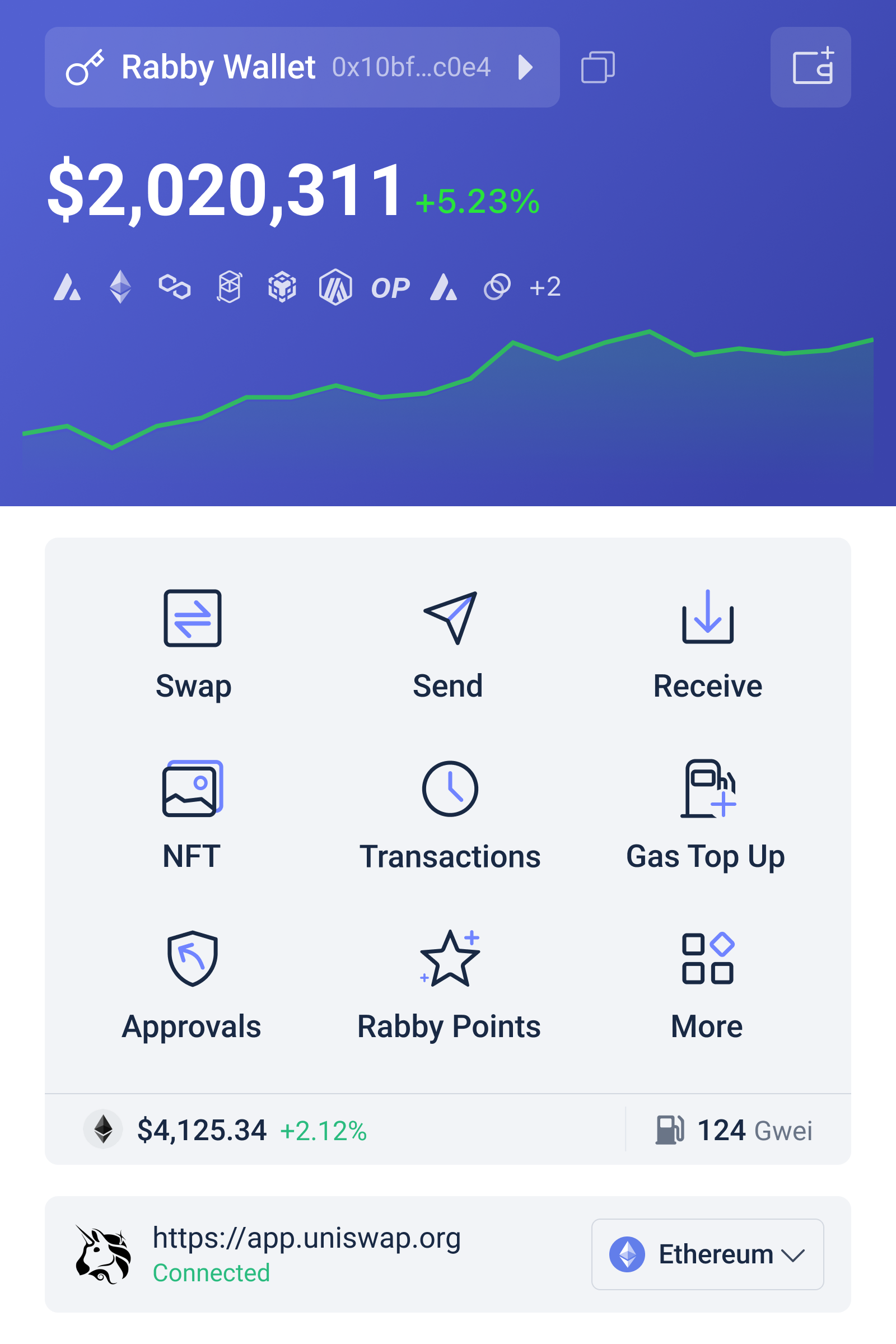
Rabby Wallet interface representing transaction simulation and multi-chain DeFi portfolio visibility

Myth One: The Highest Yield Is the Best Opportunity

Yield farming usually means supplying assets to a decentralized protocol in exchange for fees, interest, incentives, or some combination of the three. A liquidity provider might deposit two tokens into an automated market maker, while a lending participant supplies capital that borrowers use. The quoted yield is a rate of return under a set of assumptions, not a guarantee and not necessarily a measure of economic profit.

The first misconception is that a large displayed APY compensates for every risk. It does not. A reward token can fall in price, incentives can be reduced, and the strategy can expose the user to smart-contract risk. In a two-asset liquidity pool, the relative price movement of the assets can also create impermanent loss: compared with simply holding the assets, the liquidity position may end up with less value when prices diverge. Fees may offset that loss, but only if trading activity and fee income are sufficient.

A more useful mental model separates gross yield from net, risk-adjusted outcome. The calculation should consider reward-token volatility, entry and exit gas, slippage, borrowing costs, tax treatment, and the probability that a protocol or oracle fails. For US users, tax reporting can add another layer of complexity because swaps, reward receipts, and liquidity movements may not map neatly onto a single economic event. A dashboard can organize the information, but it cannot determine a user’s tax position or eliminate the underlying uncertainty.

The non-obvious point is that yield farming is partly a bet on future market structure. A high incentive may attract liquidity, but that liquidity can leave when the incentive falls. A lower nominal yield from durable trading fees or lending demand may be more resilient than a spectacular temporary reward. The relevant question is not “What is the APY?” but “Where does the return come from, and what must remain true for it to continue?”

Myth Two: MEV Protection Means a Transaction Cannot Be Exploited

MEV, or maximal extractable value, describes value gained by controlling or influencing transaction ordering. A searcher might identify a large swap, place a transaction before it, and trade after it, creating a sandwich attack. Other forms of MEV involve arbitrage, liquidations, or backrunning. Some forms help markets converge toward consistent prices; others impose costs on ordinary users.

MEV protection is therefore not a magic shield. It generally changes how a transaction is submitted, simulated, or ordered, reducing exposure to particular attack paths. Protection may depend on the network, the wallet’s routing, the available infrastructure, the transaction type, and whether a private submission mechanism is being used. A user should ask what threat is being reduced, on which chain, and under what conditions.

Transaction simulation addresses a different but related problem. Before signing, a simulation can estimate token balance changes and reveal contract interactions. This helps prevent blind signing, especially when a transaction’s human-readable description is incomplete or misleading. A pre-transaction risk scan may also flag previously compromised contracts or interactions with addresses that appear invalid.

Simulation has a boundary: it is an estimate of execution under a particular state, not a universal prediction. Blockchain state can change between simulation and confirmation. A contract can behave differently when called through another route, and an economic loss may occur even when the transaction executes exactly as simulated. For example, a correctly simulated swap can still suffer from market movement or poor execution if the user accepts an inadequate price limit.

This distinction matters. Simulation improves observability; MEV protection can improve transaction privacy or ordering conditions. Neither substitutes for checking the protocol, the token, the recipient, the allowance, and the economic purpose of the action. Used together, they reduce different categories of error.

Myth Three: Portfolio Tracking Is Just a Convenience Feature

Portfolio tracking becomes more important as a strategy becomes more complex. A single wallet may hold assets on Ethereum, Arbitrum, Optimism, Polygon, Avalanche, BNB Chain, and many other EVM-compatible networks. The visible token balance is only one layer. A realistic view also needs to account for supplied assets, borrowed liabilities, liquidity-pool shares, vesting or claimable rewards, staked positions, and outstanding approvals.

Rabby is designed around this DeFi-heavy environment, supporting more than 140 EVM-compatible networks and automatically detecting the network required by a decentralized application. Its connection to DeFi portfolio tracking makes it useful for users who need to inspect positions across chains rather than treating each network as an isolated account. The rabby wallet can also help users review transaction effects before approval, which is especially relevant when a farming strategy involves repeated deposits, approvals, claims, and withdrawals.

Yet a portfolio screen is not the same as a risk engine. Valuation depends on price feeds, contract interpretation, and the ability to identify complicated positions. A dashboard may show the market value of a liquidity position while leaving the user to infer impermanent loss, protocol concentration, oracle dependence, or liquidation exposure. The right use of tracking is comparative: observe how exposure changes over time, not merely whether the headline dollar value increased.

One practical framework is to review a farm through four questions. First, what assets are actually owned after the transaction? Second, what permissions have been granted, and to which contracts? Third, what external condition produces the return—trading volume, borrowing demand, emissions, or leverage? Fourth, what is the exit path if liquidity disappears or the chain becomes expensive? This framework turns a wallet from a balance viewer into a decision-support tool, while preserving the user’s responsibility to evaluate the strategy.

Security Is a Process, Not a Product Label

Self-custody changes the risk distribution. Private keys are encrypted and stored locally rather than transmitted to a backend server, but the user remains responsible for device security, recovery material, signing decisions, and malicious interfaces. Local storage reduces dependence on a custodian; it does not make phishing, malware, or social engineering impossible.

For larger holdings, hardware-wallet integration with devices such as Ledger, Trezor, Keystone, and BitBox02 can place key operations behind a separate signing device. Multi-signature support through Gnosis Safe can further reduce single-key failure by requiring several authorized signers. These arrangements improve operational resilience, but they add coordination costs. A lost signer, unclear recovery process, or poorly defined approval policy can make legitimate actions difficult when speed matters.

Approval management is another underappreciated part of yield-farming hygiene. Token approvals can allow a contract to spend assets later, sometimes for an amount far larger than the user currently intends to deposit. Revoking unused or suspicious approvals reduces the window for unauthorized drainage, although revocation itself requires a transaction and therefore costs gas. A cross-chain gas top-up tool can make that operational problem easier when a user lacks the native gas token on a particular network, but it does not remove the cost or validate the protocol being used.

Open-source code and independent audits can improve transparency and provide opportunities for review. They do not prove that every deployment is safe, that every dependency is sound, or that a newly added contract matches an audited version. Users should distinguish a wallet’s security features from the security of the protocols they access through it.

What to Watch as DeFi Interfaces Mature

The recent positioning of Rabby around Ethereum and EVM networks reflects a broader direction: wallets are becoming interpretation layers for on-chain activity rather than simple key containers. If transaction simulation, risk scanning, portfolio context, and chain switching continue to improve, users may make fewer errors caused by fragmented interfaces. That is a plausible operational benefit, not evidence that protocol risk has disappeared.

The main boundary is coverage. Rabby’s focus is EVM-compatible chains; it does not provide native support for non-EVM networks such as Bitcoin or Solana, and it has no built-in fiat on-ramp. Users with a multi-ecosystem portfolio may therefore need additional tools. Even within EVM networks, custom RPCs and long-tail protocols create an information-quality problem: a wallet can display an interaction without being able to establish that the underlying economic design is sound.

For advanced users, the best near-term signal is not a bigger list of supported chains or a higher advertised yield. It is whether interfaces make uncertainty visible: stale pricing, changing slippage, contract permissions, bridge dependencies, reward dilution, and differences between simulated and final outcomes. Better visibility may reduce avoidable mistakes while leaving unavoidable market and protocol risks intact.

FAQ

Does transaction simulation guarantee that a yield-farming transaction is safe?

No. Simulation can show expected balance changes and contract interactions before signing, and risk scanning can identify certain warning signals. It cannot guarantee that a protocol is economically sound, that market prices will remain stable, or that blockchain state will not change before execution.

Can MEV protection eliminate losses from a decentralized exchange trade?

No. MEV protection may reduce exposure to particular transaction-ordering attacks, but users can still face slippage, adverse price movement, contract bugs, liquidity shortages, and incorrect parameters. The protection should be understood as a risk reduction mechanism with chain- and transaction-specific limits.

What should a DeFi portfolio tracker show beyond token balances?

It should help users identify positions across networks, liabilities, claimable rewards, liquidity exposure, approvals, and the assumptions behind valuation. Even then, users should independently assess impermanent loss, protocol concentration, gas costs, and the conditions supporting the advertised return.

The clearest lesson is simple but easy to neglect: yield is the outcome of a mechanism, not a label; MEV protection is a targeted defense, not immunity; and portfolio tracking is useful only when it exposes exposure rather than hiding it behind one aggregate balance. A sophisticated wallet can make those distinctions easier to see. The final judgment still belongs to the person signing the transaction.

Categories
Uncategorized

MetaMask Wallet: Cross-Chain Token Bridge und liquide Multi-Chain Strategien

Ein Nutzer hält Ethereum-basierte Token auf Polygon, möchte aber Liquidität auf Arbitrum bereitstellen und gleichzeitig NFTs auf Optimism verwalten. Die klassische Lösung wären mehrere Wallets, mehrere Seed Phrases und manuelle Transfers über Exchanges. Mit einer modernen, nicht-verwahrten Lösung entfällt dieser Aufwand: Ein MetaMask Wallet ermöglicht es, über ein und dieselbe Wiederherstellungsphrase auf mehreren EVM-kompatiblen Netzwerken zu arbeiten, Token direkt zwischen Chains zu brückeln und dabei volle Kontrolle über Private Keys zu behalten.

Das zentrale Problem, das Cross-Chain-Strategien lösen müssen, ist nicht die Technologie selbst, sondern die praktische Umsetzung. Liquidity Bridges, Wrapped Tokens, Atomic Swaps und native Asset-Transfers folgen verschiedenen Sicherheitsmodellen. Ein Token, der auf Ethereum als ERC-20 existiert, kann auf Polygon, Arbitrum oder Optimism in unterschiedlichen Formen verfügbar sein – als Wrapped Token, über eine Brücke gebrückeltes Original oder als natives Asset. Welche Methode sicher ist, wie lange die Transaktion dauert und welche Gebühren anfallen, hängt vom gewählten Brückenmechanismus ab. Das MetaMask Wallet bietet hier die Infrastruktur; die Entscheidungskompetenz bleibt beim Nutzer.

MetaMask Wallet Interface mit Multi-Chain-Netzwerkauswahl und Token-Bestände über Ethereum, Polygon, Arbitrum und Optimism

Die Architektur eines non-custodial Multi-Chain Wallets

Das MetaMask Wallet speichert keine privaten Schlüssel auf zentralisierten Servern. Stattdessen wird eine 12-Wort-Seed-Phrase nach dem BIP-39- und BIP-44-Standard generiert und lokal auf dem Gerät oder im Browser gespeichert. Diese Seed Phrase ist der kryptographische Ursprung: Sie erlaubt die deterministische Ableitung von privaten Schlüsseln für jedes unterstützte Netzwerk. Ein Nutzer mit einer einzigen Seed Phrase kann damit auf Ethereum, Polygon, Arbitrum, Optimism und anderen EVM-kompatiblen Networks arbeiten – jedes mit einer eigenen Adresse, die aus derselben Master-Seed hergeleitet wird.

Das Schlüsselelement ist die ECDSA-Kryptographie: Sie signiert Transaktionen lokal auf dem Gerät, bevor sie an das Blockchain-Netzwerk übertragen werden. Der private Schlüssel verlässt das Gerät niemals. Selbst wenn ein Angreifer die MetaMask-Browser-Extension oder die Mobile App kompromittiert, kann er ohne den lokalen Speicher und die Geräteentschlüsselung nicht auf die private Keys zugreifen. Das setzt jedoch voraus, dass die Nutzer ihre Seed Phrase geheim halten und ihr Gerät selbst schützen.

Die Synchronisation zwischen mehreren Geräten funktioniert durch die identische Seed Phrase: Ein Nutzer kann sein MetaMask Wallet auf dem Smartphone und dem Desktop mit derselben 12-Wort-Phase wiederherstellen und erhält auf beiden Geräten die identischen Adressen und Konten. Das ist komfortabel, schafft aber auch eine konzentrierte Angriffsfläche. Wenn die Seed Phrase gestohlen wird, sind alle synchronisierten Wallets potentiell kompromittiert. Die Sicherheit liegt daher nicht im Wallet selbst, sondern in der sicheren Verwaltung der Recovery Phrase.

Ein häufiges Missverständnis ist, dass ein MetaMask Wallet durch seine Existenz automatisch privat oder anonym macht. Das ist nicht wahr. Das Wallet speichert zwar die Keys lokal, aber jede Transaktion wird in die öffentliche Blockchain geschrieben. Adressen, Mengen, Zeitstempel und Transaktionshistorie sind für jeden einsehbar – unabhängig davon, ob sie über MetaMask, einen Hardware Wallet oder einen anderen Client signiert wurden. Die non-custodiale Architektur bedeutet Kontrolle, nicht Privatsphäre im technischen Sinne.

Netzwerk-Switching und Chain-spezifische Adressen in MetaMask

Eine zentrale Fähigkeit des MetaMask Wallets ist der nahtlose Wechsel zwischen EVM-kompatiblen Networks. Das Wallet zeigt oben eine Netzwerk-Dropdown-Liste an, in der Nutzer zwischen Ethereum Mainnet, Polygon, Arbitrum, Optimism, BNB Smart Chain, Base, Avalanche und vielen anderen wechseln können. Wichtig: Die Adresse des Nutzers ist auf jeder Chain identisch – da sie aus derselben Seed Phrase hergeleitet wird. Das bedeutet aber nicht, dass Token automatisch auf jeder Chain vorhanden sind.

Ethereum und Polygon teilen zwar die Adress-Struktur, aber ein ERC-20 Token auf Ethereum existiert nicht automatisch auf Polygon. Wenn ein Nutzer einen USDC-Balance auf Ethereum hat, kann er nicht einfach das Netzwerk wechseln und den USDC dort ausgeben – es sei denn, der Token wurde entweder über eine Bridge auf Polygon gebrückelst oder ist auf Polygon nativ emittiert worden. Das ist eine häufige Quelle von Verwechslungen. Der Nutzer sieht seine Adresse auf beiden Networks, aber die Bestände sind separiert.

Das MetaMask Wallet zeigt für jedes Netzwerk die entsprechenden Bestände an – allerdings nur die, die erkannt werden. Wenn ein Token nicht in der Standard-Liste ist, kann ein Nutzer ihn manuell hinzufügen, indem er die Vertragsadresse auf dem betreffenden Netzwerk einträgt. Das ist flexibel, aber auch fehleranfällig: Wenn die falsche Vertragsadresse eingegeben wird – etwa ein Scam-Token mit ähnlichem Namen – zeigt das Wallet den Balance für diesen gefälschten Contract an. Der Nutzer muss selbst überprüfen, dass er den richtigen Contract nutzt.

Für den praktischen Betrieb bedeutet das: Vor jedem Transfer sollte der Nutzer drei Dinge überprüfen. Erstens, in welchem Netzwerk bin ich gerade – wird oben in der MetaMask Wallet angezeigt. Zweitens, existiert der Token auf diesem Netzwerk wirklich und bin ich auf dem richtigen Contract? Drittens, habe ich ausreichend Gas-Token (ETH auf Ethereum, MATIC auf Polygon, ARB auf Arbitrum usw.) für die Transaktion? Ein häufiger Fehler ist, Token auf das falsche Netzwerk zu senden oder zu versuchen, eine Transaktion ohne ausreichend Gas auszulösen.

Token Bridges und Cross-Chain Transfer Mechanismen

Um einen Token von Ethereum auf Polygon zu transferieren, gibt es mehrere technische Optionen. Die einfachste und zugleich riskanteste ist ein wrapped Token: Der ursprüngliche Token wird auf Ethereum gelockt, und ein Wrapped-Pendant wird auf Polygon emittiert. Dieser Prozess wird oft von Drittanbietern durchgeführt – etwa von Stargate, Synapse oder dem Portal Token Bridge. Der Vorteil ist Geschwindigkeit; der Nachteil ist die zusätzliche Gegenpartei-Abhängigkeit. Wenn der Bridge-Service gehackt wird oder die Wrapped Tokens nicht vollständig gedeckt sind, verliert der Nutzer potentiell.

Eine sicherere Alternative sind native Brückenmechanismen, die vom Protokoll selbst unterstützt werden. Polygon hatte lange eine eigene Bridge nach Ethereum; Optimism und Arbitrum betreiben offizielle Bridges. Diese verwenden kryptographische Proofs, um Assets sicher zwischen Chains zu überführen – oft mit längeren Finality-Zeiten (Optimism braucht 7 Tage für vollständige Finality auf Ethereum). Das MetaMask Wallet integriert solche Bridges teilweise über externe DApps, aber der Nutzer muss selbst entscheiden, welchen Service er nutzt.

Im MetaMask Wallet selbst gibt es einen integrierten Token Swap, der Liquidität über mehrere Quellen aggregiert. Diese Swaps funktionieren oft über sogenannte Liquidity Aggregatoren wie 1inch oder 0x, die über viele DEXs hinweg nach dem besten Preis suchen. Ein Nutzer kann also USDC auf Ethereum direkt gegen DAI tauschen, ohne die Chain zu wechseln. Für Cross-Chain-Swaps ist das Wallet jedoch auf Bridges oder spezialisierte Cross-Chain-DEXs angewiesen – das ist ein technisch komplexerer Prozess, der länger dauert und mehr Gebühren kostet.

Eine praktische Multi-Chain-Strategie könnte so aussehen: Ein Nutzer hat 100 USDC auf Ethereum. Er kann diese über eine etablierte Bridge wie Synapse oder Stargate auf Polygon transferieren (Gebühr: ca. 1–3 USD, Zeit: 5–10 Minuten). Dort erhält er 100 USDC.e (wrapped) oder 100 USDC.p (native Polygon USDC, seit der Circle-Migration). Dann kann er diese auf eine DEX wie Uniswap auf Polygon gegen USDT, WMATIC oder andere Assets tauschen. Jeder Schritt ist reversibel, aber jeder Schritt kostet Gas und Zeit.

Liquidity Provisioning und Yield Strategien über mehrere Chains

Sobald Nutzer Token auf verschiedenen EVM-kompatiblen Networks haben, stellt sich die Frage, wo sie Rendite generieren. Ein MetaMask Wallet ermöglicht es, mit denselben Tokens Liquidität auf mehreren DEXs bereitzustellen. Beispiel: Ein Nutzer hat USDC und ETH auf Ethereum und möchte Yield generieren. Er könnte diese Liquidity auf Uniswap v3 auf Ethereum bereitstellen (aktuelle Rate: ca. 3–8% APY für breite USDC/ETH Positionen, abhängig von Gebühren und Konzentration).

Parallel könnte derselbe Nutzer andere USDC und WMATIC, die er zuvor auf Polygon transferiert hat, auf Uniswap v3 auf Polygon bereitstellen (dort oft 5–15% APY, da das Volumen geringer ist und die Konkurrenz weniger dicht). Auf Arbitrum könnte er GMX oder andere spezialisierte Protokolle nutzen. Die Renditen variieren stark je nach Liquiditätspaaren, Handelsvolumen und Marktbedingungen. Ein MetaMask Wallet macht es technisch einfach, auf all diesen Plattformen aktiv zu sein – der Nutzer braucht nur die Seed Phrase einmal zu sichern.

Das Risiko dabei ist vierfältig. Erstens: Impermanent Loss. Wenn die Preise der beiden Assets auseinandergehen, während man Liquidität bereitstellt, erleidet man einen Verlust im Vergleich zum einfachen Halten. Zweitens: Smart Contract Risiko. Jedes DeFi-Protokoll auf jeder Chain kann gehackt werden. Arbitrum hat andere Audits und Sicherheitsstandards als Polygon oder Optimism. Drittens: Bridge Risiko. Wenn ein Token über eine schwache Bridge transferiert wurde, kann der Wert des Wrapped Tokens zusammenbrechen. Viertens: Gas und Slippage. Die Gebühren und Preisschlupf akkumulieren sich über mehrere Transaktionen.

Ein erfahrener Nutzer eines MetaMask Wallets berücksichtigt diese Risiken durch Diversifikation und Positionsgröße. Statt 100% der Liquidity auf eine einzige Chain oder ein einziges Protokoll zu konzentrieren, verteilt man sie bewusst. Man nutzt etablierte Protokolle wie Uniswap, Aave oder Lido statt experimenteller neuer DApps. Man nutzt offizielle Bridges des Netzwerks selbst, nicht volatile Third-Party-Bridges. Und man reserviert Zeit, um die Positionen zu monitoren und bei Bedarf abzubauen, bevor Märkte crashen.

Sicherheitsmodelle und Wiederherstellung über Chain-Grenzen hinweg

Die Sicherheit eines MetaMask Wallets wird oft als „non-custodial” beschrieben, was bedeutet, dass der Nutzer selbst die Schlüssel hält. Das ist wahr – und zugleich ist es eine Form der Verantwortung, die viele unterschätzen. Eine 12-Wort-Seed Phrase ist das einzige, das zwischen vollständiger Kontrolle und totalem Verlust steht. Wenn diese Phrase gestohlen wird – etwa weil sie in einem Screenshot, einer E-Mail oder einer Notizbuch-App gespeichert wurde – kann ein Angreifer auf sämtliche Konten auf sämtlichen Chains zugreifen.

Das MetaMask Wallet bietet bei der Erstellung eine Warnung an, die Seed Phrase offline zu speichern und niemals zu teilen. Leider ignorieren viele Nutzer diese Warnung. Sie speichern die Phrase in einem Cloud-Dokument, einem Passwort-Manager, einer E-Mail oder sogar im Browser selbst. Das ist nicht sicherer als das Halten von Bargeld in einem öffentlichen Raum mit dem Schild „bitte stehlen”. Professionelle Angreiter scannen GitHub, Dropbox, Gmail und andere Services automatisch nach Seed Phrases. Innerhalb von Minuten ist das Wallet leergeräumt – über alle Chains hinweg.

Ein verbessertes Sicherheitsmodell für größere Bestände nutzt Hardware Wallets wie Ledger oder Trezor. Das MetaMask Wallet kann mit diesen Geräten verbunden werden: Die Seed Phrase wird auf dem Hardware Wallet generiert und gespeichert, und das MetaMask Wallet fungiert nur als Interface. Jede Transaktion muss auf dem Hardware Wallet selbst signiert werden. Das Risiko bleibt, dass das Gerät selbst verloren oder beschädigt wird – aber nur, wenn auch die Hardware-Backup-Phrase sicher gespeichert ist.

Für die Wiederherstellung im Katastrophenfall ist entscheidend, dass die gleiche Seed Phrase überall funktioniert. Ein Nutzer mit Geräten in verschiedenen Ländern kann sein MetaMask Wallet auf jedem Gerät mit der gleichen Phrase wiederherstellen und erhält die identischen Adressen und Bestände auf Ethereum, Polygon, Arbitrum und anderen Networks. Das ist ein großer Vorteil gegenüber zentralisierten Exchanges, die nur von registrierten Konten erreichbar sind. Gleichzeitig bedeutet es, dass die Phrase self backups werden muss – nicht im digitalen Netzwerk, sondern in physischer Form, an mehreren Orten, geschützt vor Diebstahl und Beschädigung.

Gebührenoptimierung und Gas-Strategien über EVM-Netzwerke

Ein fundamentales Missverständnis über Multi-Chain-Strategien mit MetaMask ist, dass alle Chains gleich teuer sind. Das ist nicht der Fall. Ethereum Mainnet hat derzeit durchschnittliche Gas-Gebühren von 20–100 Gwei, abhängig von Netzwerkauslastung. Ein einfacher Token Transfer kostet heute 30–150 USD. Polygon dagegen hat Gebühren von 0,01–0,10 USD für denselben Transfer. Arbitrum und Optimism liegen bei 0,10–1 USD. Base ist ähnlich günstig wie Polygon.

Das MetaMask Wallet zeigt die geschätzte Gas-Gebühr vor Bestätigung an und ermöglicht es, diese manuell anzupassen. Ein unerfahrener Nutzer akzeptiert einfach den Vorschlag. Ein versierter Nutzer nutzt Tools wie ETHGasStation oder Blocknative, um zu sehen, wann das Netzwerk weniger ausgelastet ist (üblicherweise außerhalb von Geschäftszeiten in den USA und Asien). Für zeitunkritische Transaktionen lohnt es sich, einige Stunden zu warten und dadurch 50% Gas zu sparen.

Eine effektive Strategie ist, kleinteilige Transaktionen auf teuren Chains (Ethereum) zu meiden und diese stattdessen auf günstigen Chains (Polygon, Arbitrum, Base) durchzuführen. Ein Nutzer könnte 10 verschiedene DEX-Swaps auf Polygon durchführen (Gesamtkosten: ca. 1 USD) statt auf Ethereum (Gesamtkosten: ca. 300 USD). Die technische Komplexität ist identisch; die wirtschaftliche Effizienz ist dramatisch unterschiedlich. Das MetaMask Wallet macht diese Mehrfach-Chain-Nutzung komfortabel – aber ob es wirtschaftlich sinnvoll ist, muss der Nutzer selbst überprüfen.

Eine weitere Gebühren-Optimierungstaktik ist Batching: Mehrere Transaktionen werden zu einer zusammengefasst, um Gas zu sparen. Ein Nutzer könnte statt drei separaten Swaps einen aggregierten Swap durchführen. Oder statt fünf verschiedene Liquidity-Positionen einzeln zu erstellen, verwendet er einen Liquidity Router, der alle auf einmal setzt. Das MetaMask Wallet selbst bietet kein automatisches Batching, aber DApps, die das Wallet nutzen, können dies implementieren. Es lohnt sich, nach solchen Optionen zu suchen – die Einsparungen können 20–50% der Gebühren ausmachen.

Praktische Fallstudien: Token-Migration und Portfolio-Rebalancing

Scenario 1: Ein Nutzer möchte seine USDC-Bestände von Ethereum auf Arbitrum migrieren, um dort in GMX zu investieren. Schritt 1: Er öffnet sein MetaMask Wallet auf Ethereum und bestätigt einen USDC-Balance von 10.000. Schritt 2: Er nutz die integrierte Bridge-Funktion oder externe Services wie der MetaMask Wallet selbst mit einem dApp wie Stargate oder Synapse und transferiert 10.000 USDC. Gebühr: ca. 2 USD. Zeit: 10–15 Minuten. Schritt 3: Er wechselt das Netzwerk in MetaMask zu Arbitrum und sieht die 10.000 USDC.e (oder USDC, je nach Bridge). Schritt 4: Er verbindet sein Wallet mit GMX und stellt die Liquidität bereit.

Scenario 2: Ein Nutzer möchte sein Portfolio rebalancen. Er hat 50 ETH auf Ethereum (Wert: ca. 100.000 USD), 100.000 USDC auf Polygon und 5.000 USDC auf Arbitrum. Er möchte 30 ETH zu Staking bringen, 20 ETH als Liquidity auf Uniswap bereitstellen und den Rest als Sicherheitsreserve halten. Das MetaMask Wallet macht es einfach, alle diese Positionen zu koordinieren: Er kann die ETH auf verschiedene DApps verteilen, die Positions-Balance überprüfen und jederzeit mit der gleichen Seed Phrase alles wiederherstellen. Die Komplexität liegt nicht in der Wallet-Verwaltung, sondern in der DeFi-Strategie selbst.

Scenario 3: Ein Nutzer verliert seinen Laptop, auf dem sein MetaMask Wallet gespeichert war. Das ist kein Problem – solange die Seed Phrase sicher gespeichert ist. Er installiert MetaMask auf einem neuen Gerät, gibt die 12-Wort-Phrase ein und erhält sofort Zugriff auf all seine Konten auf Ethereum, Polygon, Arbitrum, Optimism und allen anderen unterstützten Networks. Alle USDC-Bestände, ETH-Positionen, NFTs und Staking-Rewards sind sofort abrufbar. Das ist die Kraft der non-custodial Architektur – die Wallet ist nur das Interface, die echte Kontrolle liegt in der Phrase.

Diese Szenarien zeigen, dass ein MetaMask Wallet nicht nur ein Tool ist, sondern ein Betriebssystem für Multi-Chain DeFi. Ein Nutzer mit Verständnis für Bridges, Gas-Gebühren, Liquidität und Risikomanagement kann damit komplexe Strategien umsetzen. Ein Nutzer ohne Verständnis kann genauso schnell Fehler machen – etwa Tokens auf das falsche Netzwerk senden oder auf Scam-Brücken fallen. Die Technologie ist neutral; die Ergebnisse hängen von Bildung und Disziplin ab.

Zukunft und Entwicklungsrichtungen für Multi-Chain Wallets

Die nächste Generation von Cross-Chain-Infrastruktur wird drei Hauptprobleme lösen müssen. Erstens: Bridge-Sicherheit. Die aktuellen Token Bridges haben unterschiedliche Sicherheitsstandards. Ein standardisiertes Modell mit gemeinsamen Wirtschaftlichen Garantien würde das Risiko für Nutzer reduzieren. Zweitens: Latency. Cross-Chain-Transaktionen dauern derzeit Minuten bis Stunden. Ein System mit Sub-Second-Finality würde viele neue Anwendungsfälle ermöglichen – etwa echte Cross-Chain-Liquidität-Pools.

Drittens: Nutzerfreundlichkeit. Ein MetaMask Wallet macht bereits vieles richtig, aber die Verwaltung von Seed Phrases und der Wechsel zwischen Netzwerken bleibt technisch. Ein zukünftiges System könnte verbergen, dass mehrere Chains existieren, und dem Nutzer eine nahtlose Single-Chain-Experience bieten – während die Transaktionen automatisch optimal über mehrere Chains geroutet werden. Das ist technisch möglich, aber wirtschaftlich schwer umzusetzen.

Konkret entwickeln sich mehrere Technologien in diese Richtung: Intents-based Architectures ermöglichen es, dass Nutzer nur ihre Absicht ausdrücken („ich will X gegen Y tauschen”), ohne die Implementierung zu spezifizieren. Solver-Netzwerke führen dann die effizienteste Lösung durch, über mehrere Chains hinweg. Account Abstraction trennt Adressen von Schlüsseln, was mehr Flexibilität erlaubt. Ob das MetaMask Wallet diese Standards adoptiert, wird über seine Relevanz in den nächsten Jahren entscheiden.

Bis dahin bleibt das MetaMask Wallet ein funktionales, wenn auch nicht perfektes Tool für Multi-Chain-Strategien. Es bietet die notwendige Kontrolle, Transparenz und Flexibilität – setzt aber auch Verantwortung und Verständnis beim Nutzer voraus. Wer diese Verantwortung ernst nimmt und sich mit den zugrundeliegenden Protokollen vertraut macht, kann damit komplexe, profitable und relativ sichere DeFi-Strategien umsetzen. Wer das unterschätzt, wird Gebühren verschwenden, auf Bridges fallen oder Tokens an falsche Adressen senden. Die Technologie ist nicht das Risiko – die Nutzer sind es.

Häufig gestellte Fragen

Kann ich mit einem MetaMask Wallet Tokens zwischen Ethereum und Polygon hin und her transferieren?

Ja. Ein MetaMask Wallet auf beiden Chains nutzt die gleiche Seed Phrase, sodass Sie die identische Adresse auf Ethereum und Polygon haben. Um Tokens zu transferieren, müssen Sie einen Bridge-Service nutzen – etwa Stargate, Synapse oder eine offizielle Netzwerk-Bridge. Der Transfer kostet eine Gebühr (typisch 1–5 USD) und dauert 5–15 Minuten. Sie müssen manuell überprüfen, dass Sie die richtige Chain und den richtigen Token auswählen – ein MetaMask Wallet schützt nicht vor menschlichen Fehlern.

Ist ein MetaMask Wallet sicherer als eine zentralisierte Exchange?

Ein MetaMask Wallet ist sicherer gegen Plattform-Hacks und Regulatory Seizure, da keine zentrale Gegenpartei die Schlüssel hält. Es ist aber unsicherer gegen Nutzerfehler: Wenn die Seed Phrase gestohlen wird, sind alle Vermögenswerte über alle EVM-kompatiblen Networks (Ethereum, Polygon, Arbitrum, Optimism, etc.) verloren. Eine Exchange kann nicht auf Ihre Wallets zugreifen – aber Sie können auch nicht selbst auf sie zugreifen, wenn Sie die Recovery Phrase verlieren. Die Sicherheit hängt von Ihrer Fähigkeit ab, die Seed Phrase zu schützen.

Welche EVM-kompatiblen Networks werden von MetaMask Wallet unterstützt?

Das MetaMask Wallet unterstützt Ethereum, Polygon, Arbitrum, Optimism, BNB Smart Chain, Base, Avalanche, Fantom, Gnosis Chain und viele weitere. Sie können Netzwerke über die Network-Dropdown hinzufügen, indem Sie RPC-Endpoints manuell eintragen – das erlaubt Zugriff auf praktisch jeden EVM-kompatiblen Network. Aber nicht alle Networks sind gleich sicher oder vertrauenswürdig. Der Zugang bedeutet nicht automatisch, dass jedes Netzwerk empfohlen wird – das bleibt Ihre eigene Verantwortung.

Kann ich ein MetaMask Wallet mit einem Hardware Wallet verbinden?

Ja. Das MetaMask Wallet kann mit Ledger, Trezor und anderen Hardware Wallets verbunden werden. Die Seed Phrase wird auf dem Hardware Wallet generiert und gespeichert. MetaMask fungiert dann nur als Interface – jede Transaktion muss auf dem Hardware Wallet selbst signiert werden. Das ist erheblich sicherer für größere Bestände, da selbst wenn Ihr Computer gehackt wird, die Private Keys nicht zugänglich sind. Sie können das hardware-gesicherte MetaMask Wallet genauso wie ein normales Wallet über metamask wallet verwenden.

Categories
Uncategorized

DEX Screener for Tax Compliance: Extracting On-Chain Data for Accurate Trade Reporting

A trader executes fifty transactions across multiple decentralized exchanges over the course of a tax year. Some trades occur on Uniswap, others on SushiSwap, Curve, or smaller liquidity pools on unfamiliar chains. Traditional centralized exchange records are unavailable because the trades never touched a centralized platform. When tax season arrives, the trader faces a practical problem: how to reconstruct a complete and defensible record of cost basis, proceeds, and holding periods without relying on centralized exchange logs or third-party gatekeepers who might not support every protocol or network used.

This scenario has become increasingly common as decentralized finance matures and traders develop genuine expertise in permissionless liquidity discovery. DEX Screener addresses part of this challenge by offering transparent, on-chain data directly from blockchain ledgers rather than proprietary databases. Instead of trusting a centralized intermediary’s internal records, a trader can verify transactions independently, reconstruct trade execution prices, identify exact swap timing, and build tax records that rest on immutable blockchain evidence rather than institutional memory or corporate cooperation.

DEX Screener interface showing real-time price charts, liquidity pool data, and trading volume across decentralized exchanges

Why decentralized exchange transparency changes tax record-keeping

Centralized exchange records have a critical vulnerability for tax purposes: they depend on institutional cooperation and data retention policies outside the trader’s control. An exchange may shut down, lose access to historical records, change ownership, or decide that compliance costs exceed the value of supporting legacy accounts. The Internal Revenue Service and equivalent foreign tax authorities ultimately require that taxpayers produce documentation for reported transactions. When that documentation comes entirely from a centralized entity that may not exist in five years, the record becomes fragile.

Blockchain transactions, by contrast, are immutable and permanently recorded across distributed networks. Every swap on a decentralized exchange creates a transaction hash, timestamp, sender address, recipient address, input amount, output amount, and gas cost—all cryptographically sealed. A trader using DEX Screener can examine this data directly, cross-reference it with blockchain explorers, and verify facts independently rather than accepting a summary from an intermediary. The platform aggregates real-time token prices, trading volume, and pair creation information across multiple blockchain networks, but the underlying evidence exists on-chain regardless of whether DEX Screener continues to operate.

This architectural difference matters for audit defense. If a tax authority questions a reported transaction, the trader’s documentation can reference a transaction hash, a specific timestamp, and a blockchain explorer record that is independently verifiable. A centralized exchange could dispute the historical price, claim the record was corrupted, or simply cease to exist. A blockchain record allows the trader and tax authority to reach the same conclusion by examining the same evidence. That shared evidentiary foundation reduces the potential for disputes rooted in data unavailability or institutional recollection.

The practical consequence is that traders and their accountants should begin treating decentralized exchange activity as a separate asset class for documentation purposes. Instead of relying on exchange exports or third-party aggregators as the primary source, they should verify key transactions independently using blockchain data and platforms that provide permissionless access to that data. Using dexscreener to cross-reference transaction details, confirm execution prices, and identify exact timing creates a more defensible record than relying on a single centralized system.

Extracting transaction-level data from DEX Screener for tax purposes

DEX Screener’s user interface presents real-time prices and trading volume in a format designed for trader decisions, but the underlying data structure also serves documentation needs. When a trader searches for a specific token pair, the platform displays historical price charts, liquidity pool data, and individual trade information. Each trade record includes a timestamp, the address that initiated the trade, the token inputs and outputs, the price executed, and the gas cost incurred. For tax purposes, these individual trade records are the foundation of accurate cost basis and gain/loss calculations.

The first step is to identify every transaction relevant to the trader’s portfolio. This means searching for all token pairs the trader has interacted with, reviewing the transaction history for each pair, and verifying that the wallet addresses shown match the trader’s own wallets or controlled addresses. DEX Screener displays this information without requiring traditional account credentials; instead, optional Web3 wallet connection through cryptographic signatures provides permissionless access to personalized data views. A trader can connect a hardware wallet, mobile wallet, or browser extension wallet, authenticate through a signature, and then filter transaction history to focus on their activity.

Once transactions are identified, the tax-critical information includes: the exact timestamp (which determines holding period), the token amounts exchanged (which calculate gains and losses), the price in a fiat or reference currency at execution time, fees paid (which reduce proceeds or increase basis), and the specific blockchain network and smart contract address (which document the venue and prevent double-counting). Blockchain analytics platforms aggregate this data across multiple decentralized exchange protocols, so a trader who used Uniswap on Ethereum, SushiSwap on Arbitrum, and Curve on Polygon can see all activity in one interface rather than manually extracting data from each protocol separately.

The distinction between on-chain data and platform display is important. DEX Screener does not create the data; it reads and indexes data that already exists on blockchains. If the platform experiences outage or changes its data retention policy, the underlying blockchain transactions remain accessible through other tools, blockchain explorers, or direct RPC queries. For tax compliance, this means that traders should document not only what DEX Screener showed them, but also where they verified that information independently. Recording both the platform reference and the blockchain explorer URL creates redundancy and reduces reliance on any single service.

Building cost basis records using permissionless decentralized exchange analytics

Calculating cost basis from decentralized exchange activity requires capturing the exact price paid for each token acquired and tracking those tokens through subsequent dispositions. DEX Screener’s decentralized exchange analytics provide the raw material for this calculation, but the accounting mechanics must still follow tax rules and may vary by jurisdiction. In the United States, the IRS requires specific identification or, if not used, application of the first-in-first-out (FIFO) method or average cost method for securities and similar assets. Cryptocurrency tax treatment remains uncertain in some contexts, but the foundational requirement is clear: traders must maintain records that show what was bought, at what price, when it was acquired, and how it was eventually disposed of.

Each DEX Screener transaction record supplies most of this information directly. The timestamp identifies the acquisition date. The input token amount and output token amount show what was exchanged. The execution price—which the platform displays by dividing output value by input amount—establishes the cost of the acquired token. Fees, whether paid in the input token or as additional gas costs, adjust the cost basis. For example, if a trader acquired 100 units of Token A by spending 10 units of Token B at an execution price of 0.1 Token B per Token A, and paid gas fees equivalent to 0.5 units of Token B, the total cost basis for 100 units of Token A is 10.5 units of Token B. When that value is converted to fiat currency using the exchange rate on the transaction date, the resulting figure is the cost basis in domestic currency.

The practical challenge emerges when transactions involve multiple hops or complex liquidity pool interactions. A single user action on a decentralized exchange may involve multiple internal transactions, contract interactions, and token conversions. DEX Screener’s role is to aggregate this complexity and present it as a single trade, but for tax purposes the trader must verify that the simplified view matches the actual chain of events. A transaction might show “100 USDC → 5 ETH,” but the actual execution might involve USDC being deposited to a liquidity pool, LP tokens being generated, a route through an intermediary token, and finally ETH being withdrawn. The tax implications (whether it is a single trade or multiple dispositions) depend on the specific chain of events, not the simplified display.

This verification process becomes essential when dealing with complex protocols or non-standard exchange mechanisms. A trader who participates in yield farming, liquidity mining, or token swaps through smart contracts should cross-reference DEX Screener data with direct blockchain exploration to ensure that the platform’s aggregation method matches the tax-relevant transaction boundaries. Many traders and accountants use specialized tax software that imports blockchain data, but that software often relies on centralized exchange APIs or limited decentralized exchange coverage. Combining that software’s cost basis calculations with independent verification using DEX Screener and blockchain explorers creates a multi-source check.

Identifying holding periods and timing for long-term capital gains treatment

Holding period determination is a direct application of blockchain timestamps provided by DEX Screener and confirming token movements. In most jurisdictions, assets held for longer than one year receive preferential tax treatment (long-term capital gains rates rather than ordinary income rates). The acquisition date is the date the trader received the token, and the disposition date is the date it was sold, exchanged, or otherwise given away. DEX Screener records both dates with blockchain precision: the minute and second, not just the day.

The practical significance is that traders should verify holding periods independently rather than relying on exchange summaries or tax software defaults. If a trader acquired a token on January 15, 2023, and sold it on January 15, 2024, the holding period is exactly one year. Many tax jurisdictions treat one year as the threshold: the day before one year is short-term, the day after is long-term. Missing a sale by a single day can change the tax outcome substantially. DEX Screener’s transaction records include timestamps to the second, so a trader can verify the exact holding period without ambiguity.

Multi-step transactions complicate holding period determination. If a trader acquired Token A, swapped it for Token B, then swapped Token B for Token C, the holding period for Token C begins on the original acquisition date of Token A (for tokens treated as fungible), not the later acquisition date of Token B. However, this treatment depends on tax law and the assets involved; some jurisdictions or assets may treat each swap as a separate acquisition. DEX Screener’s transaction timeline allows a trader to trace the exact sequence of events and provide documentation for whichever holding period method applies under their jurisdiction’s rules.

The role of on-chain data here is to establish incontrovertible evidence of timing. A tax authority cannot dispute that a transaction occurred on a specific date when that date is recorded on an immutable blockchain. While accounting treatment and legal interpretation of that timing may remain subject to debate, the factual foundation is no longer dependent on institutional memory or database records. DEX Screener makes this data accessible and searchable; the trader’s responsibility is to apply the correct tax rule to the correctly identified timing.

Handling complex transactions: yield farming, LP tokens, and non-standard swaps

Decentralized finance extends beyond simple token swaps into more complex strategies that test the limits of standard tax reporting. Yield farming, liquidity provision, staking, and complex contract interactions generate transactions that are not easily characterized as simple buy-or-sell events. DEX Screener focuses on pair data and trading volume, so its primary utility for tax purposes lies with discrete exchange transactions rather than ongoing yield or liquidity positions. However, the platform still provides useful reference data for more complex scenarios.

When a trader deposits tokens into a liquidity pool, they typically receive LP tokens (liquidity provider tokens) in return. This is a disposition of the input tokens and an acquisition of the LP tokens. When fees accrue within the pool, those represent additional income. When the trader withdraws from the pool, they receive output tokens and may realize gains or losses on the LP tokens themselves. Each of these events—deposit, accrual, withdrawal—is a separate taxable transaction in most jurisdictions. DEX Screener can show the LP token creation and removal, but the fees and intermediate value changes may require additional research using blockchain explorers or specialized yield-tracking software.

The practical approach is to use DEX Screener to identify liquidity pool events and gather baseline transaction data, then supplement with blockchain explorer queries or specialized tools for the complete fee and income calculation. For example, a trader who provided liquidity to a Uniswap pool for a year can see on DEX Screener when the LP position was created and closed. The platform’s volume data can help establish context. But to calculate the exact fees earned, the trader needs to query the specific pool contract or use a tool designed for that purpose. DEX Screener’s transparency and on-chain data foundation make it a reliable starting point, but it is not always sufficient for the complete picture.

Non-standard swaps through specialized AMMs, aggregators, or flash loans present similar challenges. DEX Screener may not parse every complex transaction into a recognizable pair format, but the underlying blockchain data still exists. A trader confronted with a transaction that DEX Screener does not clearly categorize should use that as a signal to investigate further through blockchain explorers, contract ABIs, or specialized analysis tools. The permissionless nature of decentralized exchanges means that novel transaction types will continue to emerge; tax compliance requires staying curious about transactions that do not fit standard patterns.

Reconciling DEX Screener data with blockchain explorers and tax software

DEX Screener serves as a convenient aggregator, but tax records should never depend on a single source. Reconciliation across multiple platforms—blockchain explorers, specialized tax software, and direct RPC queries—creates redundancy and confidence in the accuracy of reported transactions. When a trader extracts data from DEX Screener and inputs it into tax reporting software, differences may emerge. The exchange price might vary slightly depending on how it is calculated. The gas fees might be presented differently. Timestamps might be off by a few seconds due to different time zone handling.

The reconciliation process begins by identifying the transaction hash from DEX Screener and looking it up directly on a blockchain explorer like Etherscan, Polygonscan, or the appropriate network-specific explorer. The transaction hash is immutable and unique; it cannot be forged or edited. By comparing what DEX Screener shows against what the blockchain explorer reveals, a trader can verify that the token amounts, timestamp, and involved addresses match. If they do not, the blockchain explorer is the authoritative source because it reads directly from the blockchain without any aggregation or interpretation layer.

Tax software may add another layer of processing, such as fee consolidation, currency conversion, or automatic cost basis calculation. When tax software results differ from DEX Screener, the question is usually not which source is “correct” but rather which assumptions each source is making about fees, timing, or asset identification. A trader who understands these assumptions can reconcile discrepancies and produce accurate records. The backup position—if reconciliation is not possible—is to document both sources and provide explanation to a tax authority rather than relying on a single source that might be dismissed as incomplete or self-serving.

For traders handling large volumes of transactions or complex strategies, this reconciliation becomes time-consuming but remains necessary for compliance. Some traders hire accountants or use specialized blockchain tax firms that perform this reconciliation as a service. Those professionals typically use multiple data sources, including DEX Screener, blockchain explorers, and exchange APIs, to cross-check transaction records and catch errors. The underlying principle is the same whether done manually or through professional service: permissionless access to on-chain data allows verification of reported transactions, and that verification is the foundation of defensible tax compliance.

Preparing audit-ready documentation from decentralized exchange activity

When tax compliance translates into audit preparation, documentation takes on heightened importance. A trader should maintain records that show the complete chain of reasoning from DEX Screener’s transaction data to the final reported figures. This means saving transaction records, blockchain explorer confirmations, price source documentation, and the cost basis calculations applied. For each transaction, a trader should be able to produce: the transaction hash, the timestamp, the wallet address involved, the input tokens and amounts, the output tokens and amounts, the execution price, the fees paid, the tax treatment applied, and the source of any price conversion to fiat currency.

DEX Screener makes this documentation straightforward because it provides permissionless access to the same data a tax authority could independently verify. Unlike a centralized exchange that might argue about historical pricing or claim database limitations, blockchain data is universally accessible. A tax authority auditing a trader who used DEX Screener can itself look up the transaction on a blockchain explorer and confirm that the amounts and timing match what the trader reported. This transparency is not a disadvantage; it reduces the potential for disputes rooted in disagreement over what actually happened.

The practical checklist for audit-ready documentation includes: separate records for each tax year and each blockchain network, transaction IDs with links to blockchain explorer confirmations, dates and times in a consistent format, token amounts in native units (not converted to fiat until the final calculation), the source of any fiat price conversion (with documentation that the source was available on the relevant date), the cost basis calculation methodology applied, and any elections or decisions made under tax law (such as FIFO versus specific identification). DEX Screener can supply most of this data; the trader’s responsibility is to organize it clearly and document any missing pieces or assumptions made.

For traders who have not maintained such detailed records during the transaction period, DEX Screener offers a degree of recovery. Even if contemporaneous records are incomplete, a trader can use DEX Screener and blockchain explorers to reconstruct transactions retroactively. This reconstruction is less ideal than contemporaneous record-keeping from a legal standpoint, but it is far better than having no documentation at all. A tax authority will generally accept reconstructed records supported by blockchain evidence over unsupported claims about transactions that occurred years ago.

Frequently asked questions

Can DEX Screener data be used directly in tax reporting software?

DEX Screener provides raw transaction data but does not export directly to most tax software in a format ready for import. A trader or accountant must extract transaction details, verify them against blockchain explorers, and either manually enter them into tax software or use a specialized blockchain tax tool that supports DEX Screener’s data structure. The export from DEX Screener—including transaction hashes, timestamps, and amounts—should be cross-referenced with blockchain explorer records before submission to ensure accuracy.

Does DEX Screener track fees and gas costs for tax purposes?

DEX Screener displays transaction information including gas costs paid on the relevant blockchain, but the exact treatment of fees for tax purposes depends on the tax jurisdiction and the specific fee structure. Some fees are deductible or increase cost basis, while others may be treated as separate expenses. A trader should verify the complete fee breakdown—including protocol fees, gas costs, and slippage—by examining the actual blockchain transaction, not relying solely on DEX Screener’s simplified display. Different jurisdictions may have different rules about whether these costs are allowable.

What should I do if DEX Screener shows different data than my blockchain explorer?

The blockchain explorer is the authoritative source because it reads directly from the blockchain without aggregation or interpretation. If DEX Screener and a blockchain explorer show different information for the same transaction, investigate the difference: it may be a timezone issue, rounding in displayed prices, or an error in DEX Screener’s parsing logic. For tax purposes, always use the blockchain explorer data as the foundation and document any discrepancies. If you cannot explain the difference, include a note in your tax records explaining what you found and which source you relied on.
